
"Insoles for foot pain" is one of the most searched phrases in this category and one of the least useful, because foot pain is not one thing. Pain in the heel, pain under the arch, a burning ball of the foot and feet that simply ache all over by evening have different causes and need different things under the foot. Buy the wrong insole and you spend money to make it worse.
So this guide starts with the only question that matters: where does it hurt? Find your answer below, and it will take you to the right product, or to a doctor if that is where you should be going.
First: when an insole is the wrong answer
See a doctor before buying anything if the pain is sudden or severe, follows an injury, stops you putting weight on the foot, comes with numbness, tingling or swelling, is in one foot only and getting worse, or if you have diabetes. Insoles support and cushion; they do not treat a fracture, a nerve problem or an infection, and they do not replace a diagnosis. Everything below is for the everyday pain that comes from hard floors, long hours and unsupportive shoes.
Where does it hurt?

| Where it hurts | What it usually is | What the insole needs | Start with |
|---|---|---|---|
| Heel, sharp with the first step in the morning | Plantar fascia strain (plantar fasciitis) | Deep heel cup and firm arch support | Plantar Specialist, ₹1,499 |
| Heel, sore after standing, no morning stab | Heel impact on hard floors | A cushioned heel pad that stays put | ComfortStep Heel Pads, ₹279 |
| Arch, aching or cramping by afternoon | A low or flat arch doing too much work | A structured arch at the right height | ProSupport Low Arch, ₹849 |
| Arch, pressure under a high instep | A high arch that the shoe never reaches | A taller arch that fills the gap | ProSupport High Arch, ₹849 |
| Ball of the foot, burning, in heels or narrow shoes | Forefoot pressure | A pad under the ball of the foot | Belle ForefootComfort, ₹279 |
| Ball of the foot, after running or court sports | Repeated forefoot impact | Forefoot cushioning with rebound | Sports Support Insole, ₹649 |
| Whole foot, tired and sore by evening | Hard floors and a flat factory liner | Everyday cushioning with a soft arch | Daily Relief Arch Insole, ₹549 |
| Whole foot and legs, from standing in one spot | No movement, constant pressure | Something under the shoe as well | Circulo Active Mat, ₹3,500 |
Heel pain
Heel pain is the most common foot pain we hear about, and it comes in two versions that get confused all the time.
Sharp heel pain with the first step out of bed, easing as you walk and returning after you sit, is the classic pattern of plantar fasciitis: the band of tissue under the foot is strained and tightens overnight. It is an arch problem that shows up in the heel, so a pad that only cushions the heel treats the symptom and leaves the cause. It needs a full insole with a deep heel cup to hold the heel steady and a firm arch to take the tension off the fascia. That is what the Plantar Specialist is built for. Most people feel the cushioning at once and the morning pain easing over two to three weeks of daily wear.

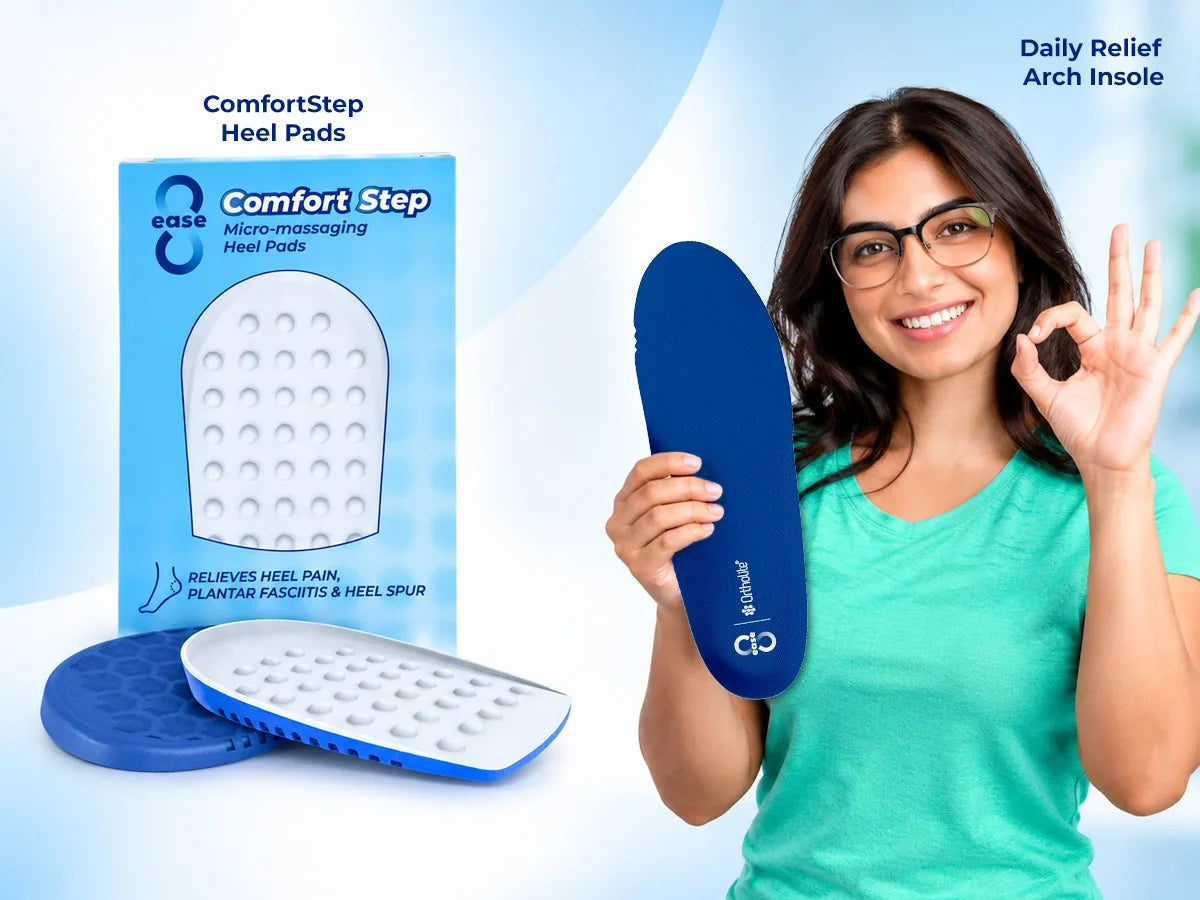
Heel soreness after a day on your feet, with no morning stab, is usually impact: tile and concrete, a formal shoe with a hard heel, no cushioning in between. A heel pad fixes that for ₹279. ComfortStep is a micro-massaging PU foam pad with an anti-slip base for office shoes and sneakers; Belle HighHeel Wellness is shaped for heels and party sandals. If you need the full insole for your main shoes and a pad for a second pair, the Plantar Recovery Kit packs both for ₹1,689.
The full explanation, including heel spurs and the first week of wearing an insole, is in Heel pain and plantar fasciitis: which insole or heel pad helps.
Arch pain
Arch pain is almost always a mismatch between the arch you have and the support you are standing on. A flat or low arch stretched across a hard floor all day aches because the muscles and ligaments are holding up what the arch should. A high arch aches for the opposite reason: nothing in the shoe reaches it, so the heel and ball take the whole load.

The fix is a structured arch at the right height, and height is chosen by the shape of your foot, not by how much it hurts. The wet foot test takes two minutes: wet your foot and step on a dry tile. Almost the whole foot shows, choose Low Arch (7 mm). A clear curve on the inside, Medium Arch (12 mm). A thin strip or nothing between heel and ball, High Arch (17 mm). All three are ₹849, so it is only a fit decision. The flat feet guide goes deeper, and Arch support insoles explained has the test step by step.
If you live in chappals, sandals and flats, a full insole will not fit. The Belle ArchEase Cushions are slim stick-on arch pads for open footwear, ₹279.
Pain under the ball of the foot
A burning or bruised feeling under the ball of the foot comes from pressure concentrated in one spot: heels that tip the weight forward, narrow dress shoes, or the repeated landings of running and court sports.
In heels and narrow shoes the answer is a pad, not an insole: Belle ForefootComfort sits under the ball of the foot and spreads the load, ₹279. For running and gym shoes, the Sports Support Insole has forefoot cushioning that absorbs the landing and springs back. For badminton and tennis, where the forefoot takes hundreds of lunges a session, the Racket Pro has a dedicated forefoot cushion zone. The sports insoles guide has the sport-by-sport table.
The whole foot aches by evening
If nothing is sharp and nothing is in one spot, but your feet are tired, heavy and sore at the end of every day, the problem is usually the floor and the liner. Tile, marble and concrete give nothing back, and the factory insole in most shoes is a thin die-cut foam that flattens in a month.

This is what the Daily Relief Arch Insole is for: OrthoLite® open-cell foam that absorbs the shock of each step, a soft moulded arch, and a slim profile that fits office shoes and sneakers. ₹549, trim-to-fit, machine washable. If you want to try an insole for less first, Basics Revive is ₹299.
If you stand in one place for hours, at a counter, a kitchen or a standing desk, add something under the shoe as well. The Circulo Active Mat keeps the feet and legs moving slightly, which is what stops the heaviness building up. The home office guide covers where to put it.
Three things that make any insole work better
Take the old liner out. Never stack. The factory insole comes out, and becomes the template you trim the new one to.
Wear it everywhere. An insole in one pair of shoes helps for the hours you are in that pair. Move it between shoes, or get a second pair for the shoes you spend the rest of the day in.
Give it a week. A proper arch feels unfamiliar for the first few days if your feet have had nothing under them for years. Start with an hour or two and build up. Cushioning helps at once; the pain that took months to build takes a few weeks to ease.
Which 8ease is right for you?
| If this sounds like you | Start with | Price |
|---|---|---|
| Sharp heel pain, worst with the first step in the morning | Plantar Specialist | ₹1,499 |
| Sore heels in office shoes, no morning stab | ComfortStep Heel Pads | ₹279 |
| Aching arches, flat or low feet | ProSupport Low Arch (7 mm) | ₹849 |
| Aching arches, high instep | ProSupport High Arch (17 mm) | ₹849 |
| Burning ball of the foot in heels or narrow shoes | Belle ForefootComfort | ₹279 |
| Sore forefoot after running or gym | Sports Support Insole | ₹649 |
| Whole foot tired by evening, hard floors | Daily Relief Arch Insole | ₹549 |
| Heel pain in your main shoes and a second pair to cover | Plantar Recovery Kit | ₹1,689 |
Free delivery above ₹599. 15-day easy returns. Ships in 5 to 7 days.
Frequently asked questions
Which insole is best for foot pain?
There is no single best one, because foot pain has several different causes. Match the insole to where it hurts: a deep heel cup and firm arch for morning heel pain, a structured arch at your height for arch pain, a forefoot pad for the ball of the foot, and everyday cushioning for feet that are simply tired. The table above is the shortest route.
Can insoles cure foot pain?
No. Insoles support and cushion the foot while you wear them; they do not change the structure of the foot or treat a medical condition. They take away the daily strain that keeps a problem going, which is often enough for everyday pain from hard floors and poor shoes. Pain that is severe, sudden or getting worse needs a doctor.
Heel pad or full insole?
A pad for heel soreness from impact, in shoes you already like. A full insole for anything involving the arch, including plantar fasciitis, and for whole-foot fatigue.
How long before an insole helps?
Cushioning is immediate. Pain that has built up over months usually eases over two to three weeks of wearing the insole every day, in every pair of shoes you spend time in.
Do I need to see a doctor first?
For everyday pain from standing, walking and unsupportive shoes, no. For sudden or severe pain, pain after an injury, numbness, swelling, pain in one foot only that is getting worse, or if you have diabetes, yes, before buying anything.
Which size do I order?
8ease insoles come in UK size bands and trim to fit; take the larger size if you are between two. The insole size guide has the full chart and the trimming steps.
This article is general information, not medical advice. If foot pain is severe, sudden, follows an injury, or does not ease with support and rest, please see a doctor or physiotherapist.
Related blogs