

Picture this: it's 5:30 AM at Cubbon Park. Riya, a software engineer turned serious runner, is halfway through her 5K run. Despite the humidity and the unforgiving concrete, her feet feel planted, powerful and connected. While others around her start to slow down on a notorious uphill stretch, she finds herself gaining momentum.
Three months ago, Riya was nursing chronic heel pain from training on Bangalore's hard surfaces. Like many Indian athletes, she thought pushing through discomfort was just part of the game. With time, she discovered what champions from Mary Kom to Neeraj Chopra understand: elite performance is about having a foundation that won't fail you when it matters most.
The reality of training in India

You know the drill. Whether you are pounding Marine Drive at 6 AM, training on the tracks of Jawaharlal Nehru Stadium, or grinding through sessions at your local gym, Indian athletes face unique challenges:
- Concrete surfaces everywhere (forget about forgiving tracks)
- Monsoon humidity that tests every piece of gear
- Long training hours and uneven quality of equipment
- Budget constraints that make every purchase decision critical
Experienced athletes and active sports players understand that your feet are your foundation. In a country where we train on some of the world's most unforgiving surfaces, that foundation had better hold.
What are sports insoles?
Here is the thing most athletes don't realise: that split second when your foot hits the ground during a sprint, or that moment when you plant and pivot on the badminton court, it all happens through a surface area smaller than your smartphone screen.
And that surface area is your feet, heel to toe. It needs maximum support to help you power through your routines. That is where sports insoles come in.
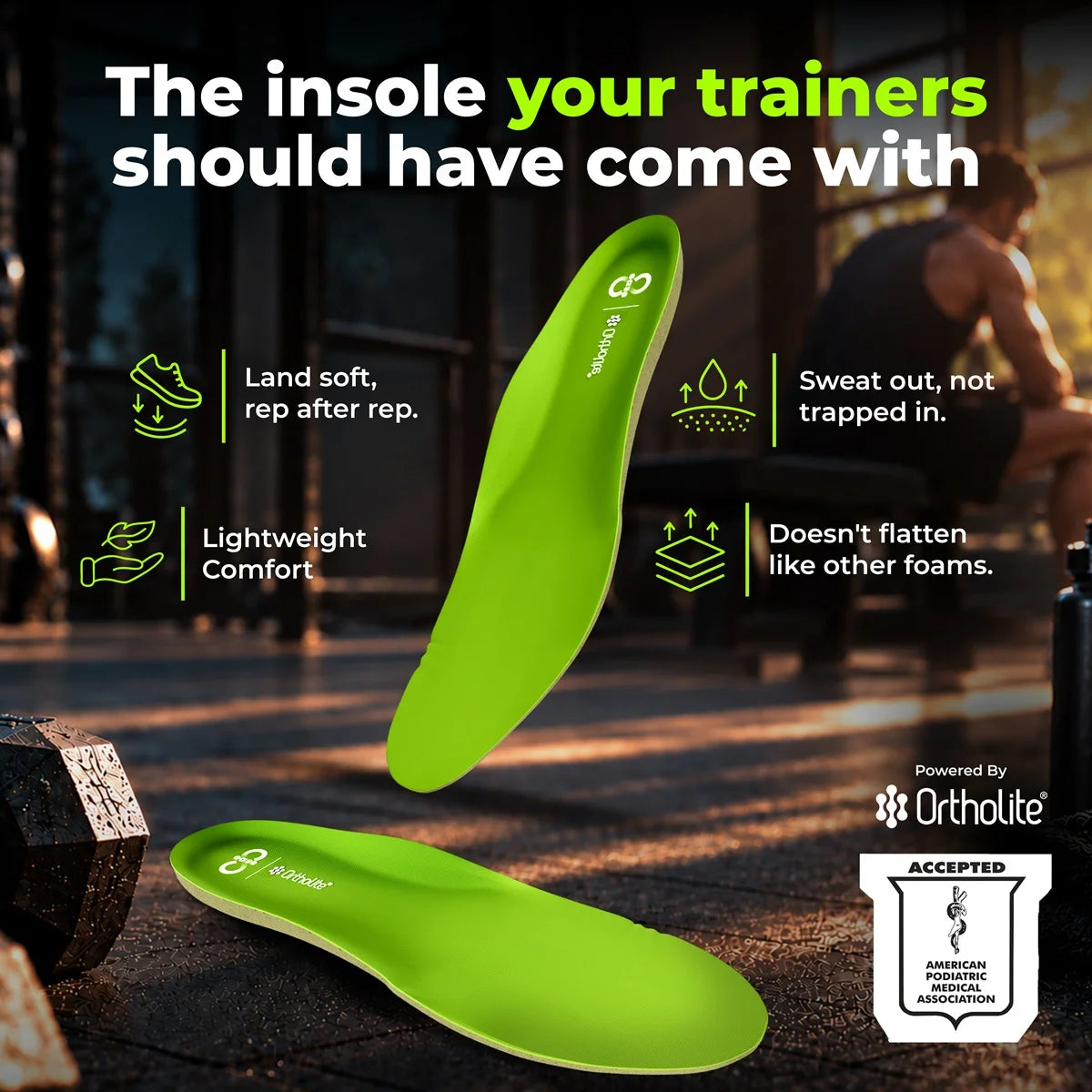
Sports insoles are padded inserts you slip into your sports shoes in place of the thin factory liner. They are precision-engineered pieces of performance equipment designed to improve every single on-ground contact you make: absorbing the landing, holding the foot steady, and giving some of that energy back on push-off.
Do I need sports insoles?
"I've made it this far without them."
That is exactly what every athlete thinks until the pain becomes bigger than their performance.
Here is the reality: if you are serious about your performance, you are already pushing your body to its limits during those intense training sessions, those long runs, those heavy lifting days.
Your feet are absorbing thousands of impacts, and without proper support you are not just risking injury, you are bleeding performance with every step.
Sports insoles reduce the chances of injury and improve your biomechanics so every ounce of effort translates into results.
Do sports insoles work?
It is a fair question. Do they make a difference? The answer is yes: sports insoles work.
People who use proper insoles regularly report less pain and discomfort from their activities. They can help with issues like plantar fasciitis, flat feet, and general soreness after training.
It is not just about comfort, it is about performance. With the right support you are able to stay active for longer periods without compromising your wellbeing. Athletes using proper insoles see less pain, faster recovery between sessions, and better biomechanical efficiency. We are talking about real gains, not placebo.
How do sports insoles work?
Sports insoles are designed to address three things that decide how your foot performs during movement:
1. Rebound and recovery (shock absorption)
The main role of a sports insole is to absorb the impact that occurs when you run, jump, or land. Without proper cushioning, the impact is absorbed by your feet, knees and joints, which is where injuries start. 8ease sports insoles are made from Ortholite® open-cell PU foam. It absorbs shock and then rebounds quickly, to give your feet that much-needed bounce and energy on the next step.
2. Arch support and alignment
When your feet are not properly aligned, it can lead to poor posture, back pain, and strain on your joints. Insoles designed for support, especially those built for flat feet or overpronation, help correct alignment. A sports insole with the right arch support encourages proper foot positioning and reduces strain on your muscles and joints.
3. Anti-slip grip
During high-movement activities, slipping inside your shoes can cause discomfort, blisters, or even injuries. All 8ease sports insoles are engineered with a textured base and anti-slip grip so they stay firmly in place inside your shoes: no shifting, no bunching. Whether you are sprinting, pivoting or changing direction, the insole stays where you put it.
How do I choose the right one for my sport?

1. Understand your sport's impact pattern
Different sports punish different parts of the foot. A runner's heel takes a thousand strikes an hour. A badminton player's forefoot takes hundreds of lunges a game. A fast bowler lands with several times their body weight on one foot, every ball. The insole has to match that pattern, which is why we make more than one.
| Your sport | What your foot takes | What the insole needs | 8ease product | Price |
|---|---|---|---|---|
| Running, jogging, long walks | Repeated heel strikes on concrete | Maximum shock absorption, heel support, energy return | Sports Support Insole | ₹649 |
| Gym, HIIT, cross-training | Mixed impact, jumps, quick feet | Shock absorption with a stable heel and anti-slip grip | Sports Support Insole | ₹649 |
| Badminton, tennis, pickleball, squash | Lunges, sudden stops, sideways pushes | Forefoot cushioning, a deep heel cup, and lateral stability so the foot does not roll on a plant | Racket Pro | ₹1,499 |
| Cricket (bowling, batting, fielding in spikes) | Heavy single-foot landings, long hours in stiff spiked shoes | A deep heel cup for the landing foot, arch support, and a metatarsal pad for the forefoot | Cricket Pro | ₹1,499 |
| Football, hockey, turf sports | Sprints, pivots and studs on firm ground | Arch support plus anti-slip grip in a narrow boot | Sports Support Insole | ₹649 |
| Weightlifting, strength training | Heavy static load, you want grounding not bounce | A firm arch shell and a stable heel cup, matched to your arch type | ProSupport (by arch height) | ₹849 |
| Cycling | Constant pressure through the ball of the foot in a tight shoe | A slim, structured insole with arch support | ProSupport Low or Medium Arch | ₹849 |
2. Know your foot type
Flat feet or overpronation: Choose a structured low-arch insole to improve alignment. For everyday and gym use that is the ProSupport Low Arch. For running, the Sports Support Insole's contoured arch is enough for most flat-footed runners; if you still roll inward, use the ProSupport Low Arch in your running shoes instead.
High arches: Opt for a cushioned insole with a taller arch that fills the gap under the midfoot. The ProSupport High Arch does this.
Neutral arches: You likely need moderate support with all-round shock absorption, which is exactly what the Sports Support Insole is.
To understand your foot type, take the wet foot test. It takes two minutes and we show it step by step here.
3. Fit matters more than you think
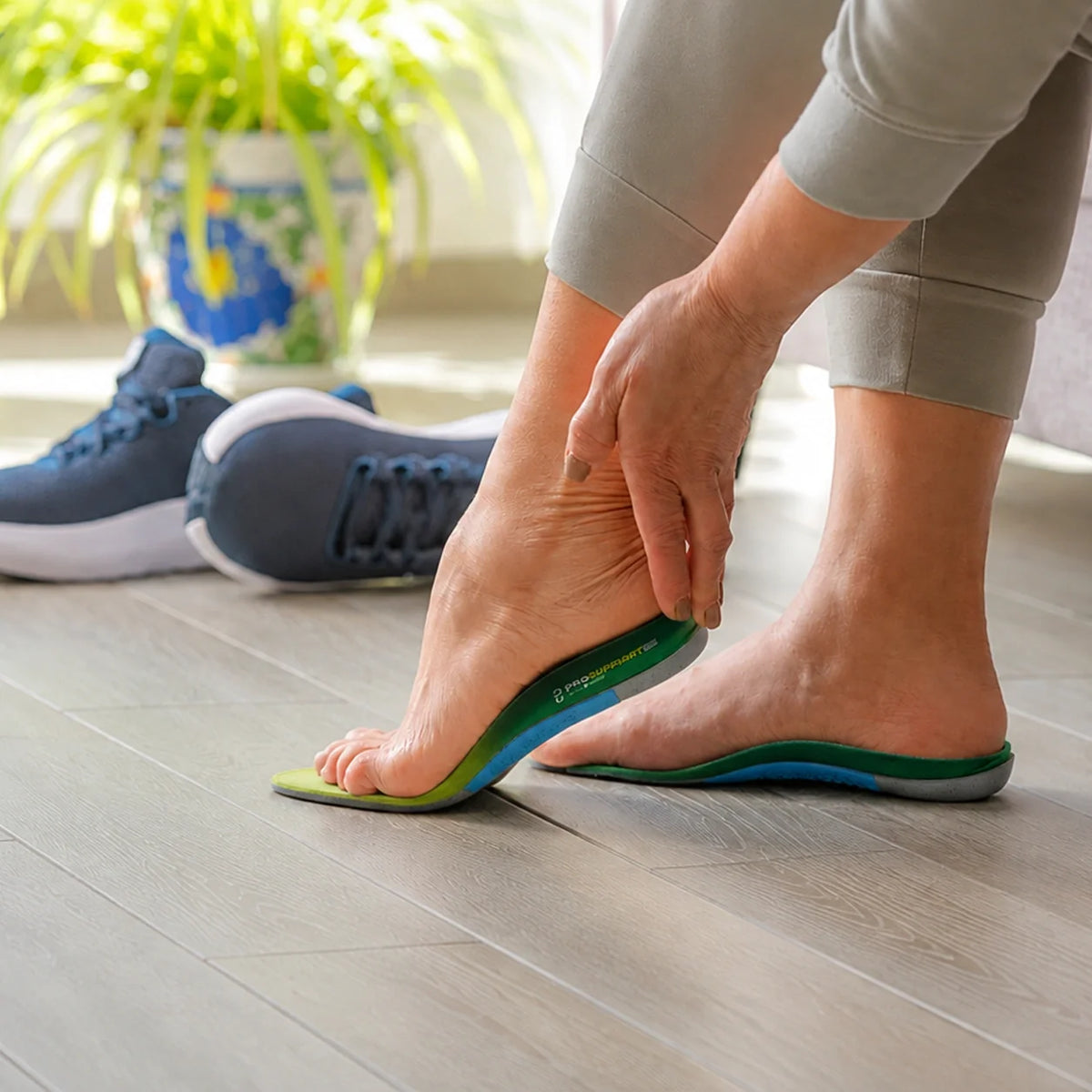
Your insole should fit your shoe without slipping. Always test it inside your actual sport-specific footwear. All 8ease sports insoles are trim-to-fit: remove the shoe's original liner, trace it onto the new insole, and cut.
4. Consider the activity duration
If you are training for hours, focus on long-wear comfort, breathability and sweat-wicking materials to prevent fatigue and blisters. Open-cell foam breathes. Gel does not.
5. Test, don't guess
Everyone's movement is unique. Slip your insoles into your shoe and walk, run or jump around to see how they respond with each change in movement.
Pro tip: if your week is a mix of running, gym and a weekend game, the Sports Support Insole is the one pair that covers most of it. If one sport is your sport, buy the one built for it.
Badminton players: sole or insole?
A lot of badminton players in India search for a "badminton shoe sole" and mean one of two different things. The outsole is the rubber on the bottom of the shoe, the gum-rubber, non-marking layer that grips the court. You cannot change it without changing the shoe. The insole is the removable layer inside the shoe, under your foot. That one you can change in thirty seconds.
If your problem is grip on the court, you need a different shoe. If your problem is sore heels, a burning forefoot after lunges, or ankles that feel wobbly on a plant, the fix is inside the shoe. The Racket Pro is built for court shoes: a deep heel cup, forefoot cushioning for the repeated lunges, and a lateral stability shell that resists the roll on a sideways push. It is trim-to-fit and sits inside Yonex, Victor, Li-Ning, Hundred and Asics court shoes without crowding the toe box.
Which 8ease sports insole should I choose?
Most Indian athletes are stuck between two options: generic foam inserts from local stores that offer zero performance benefit, or expensive imported brands designed for Western feet and conditions, not the reality of training in Mumbai's humidity or on Delhi's concrete.
At 8ease, we realised the active Indian deserved better insoles, so we built three.
The Sports Support Insole is the all-rounder. It uses OrthoLite® R&R™ (Rebound & Recovery) technology: high-density open-cell PU foam that absorbs shock and rebounds quickly, so your feet recover with less stress between strides. Add moisture management, lasting cushioning and high breathability, and you have an insole built to handle India's weather and most people's training week. ₹649.
The Racket Pro is for court sports. Deep heel cup, forefoot cushioning, and a TPU lateral stability shell for the sideways forces that badminton, tennis and pickleball put through the foot. ₹1,499.
The Cricket Pro is for cricket shoes and spikes. A deep heel cup to cushion the landing foot through a long bowling spell, arch support for hours of standing in the field, and a metatarsal pad under the forefoot for batting and fielding. ₹1,499.
All three are Ortholite® powered, anti-slip, washable and trim-to-fit.
Do sports insoles prevent injury or help with recovery from injury?
Sports insoles are a smart investment but they are not a cure-all. When used as part of proper footwear, training and rehab, they offer consistent protection against overuse injuries, help recovery, and help you stay on your game longer.
They work through three mechanisms:
Preventive edge: By absorbing impact and keeping the foot aligned, sports insoles reduce the repeated stress that leads to overuse injuries like shin splints and stress fractures.
Recovery aid: They reduce the load on the painful area, which supports pain relief and functional recovery after an injury.
Performance boost: Comfort and anti-slip grip mean a steadier foot, which means a steadier knee and hip, and a lower risk of the foot overpronating or supinating under load.
Which 8ease is right for you?
| If this sounds like you | Start with | Price |
|---|---|---|
| Running, gym, football, or a mixed training week | Sports Support Insole | ₹649 |
| Badminton, tennis, pickleball or squash | Racket Pro | ₹1,499 |
| Cricket, in spikes or cricket shoes | Cricket Pro | ₹1,499 |
| Flat feet that roll inward when you run or lift | ProSupport Low Arch (7 mm) | ₹849 |
| High arches | ProSupport High Arch (17 mm) | ₹849 |
| Sharp heel pain in the morning after training | Plantar Specialist | ₹1,499 |
Free delivery above ₹599. 15-day easy returns. Ships in 5 to 7 days.
FAQs
1. Are Sports Support insoles good for runners?
"I've been running every weekend for months, and my feet feel supported, not sore." Designed to reduce impact and increase comfort, 8ease Sports Support insoles are built for runners, offering shock absorption and foot alignment to help prevent fatigue and injuries. The OrthoLite® R&R™ foam is designed to help you push harder, recover faster, and perform at your peak.
2. Open-cell foam or memory foam for sports: which one is better?
"I tried both, and open-cell foam keeps my feet cooler and more stable during workouts." Open-cell foam is the better choice for sports. It is breathable, flexible, and adapts to your foot's movements, offering better comfort and support than memory foam, which heats up and flattens over time.
3. Can I wear sports insoles if I have flat feet?
"I've got flat feet, but with the right insoles, my pain has drastically reduced." Yes. For most flat-footed runners the Sports Support Insole's contoured arch is enough. If your foot still rolls inward, or you lift heavy, use the ProSupport Low Arch instead. It has a 7 mm structured arch shell built for exactly that foot.
4. Which insole for badminton shoes?
The Racket Pro. Badminton puts sideways force through the foot on every lunge and plant, which a running insole is not built for. The Racket Pro's lateral stability shell and deep heel cup are designed for that movement, and it fits standard court shoes from Yonex, Victor, Li-Ning, Hundred and Asics.
5. Do I need a different insole for cricket?
If you bowl or field for long hours in spikes, yes. Cricket shoes are stiff and the landing foot takes a heavy load every delivery. The Cricket Pro has a deep heel cup for the landing, arch support for the hours in between, and a metatarsal pad for the forefoot. For nets and casual games the Sports Support Insole works.
6. How long do sports insoles last?
The Ortholite® foam in 8ease insoles is built to keep its shape and bounce through 2+ years of regular training. If you notice the cushioning going flat or the arch losing shape, it is time to replace.
This article is general information, not medical advice. If pain is sharp, sudden, follows an injury, or does not ease with rest and support, please see a doctor or sports physiotherapist.
Related blogs