
It's 11 at night. The children are finally asleep, and you are scrolling through insoles for your son's school shoes. One listing promises to "build a healthy arch". A parenting forum says children should never wear insoles. Your sister-in-law's paediatrician suggested special shoes that cost a small fortune.
Everyone sounds certain. Nobody agrees.
So here is a straight answer from a brand that sells kids insoles, which is exactly why we think you should hear it from us. Most children don't need arch support insoles. No insole can build an arch. And for one specific kind of child, a soft insole can make long days in school shoes noticeably more comfortable.
Let's sort out which child is which.
Do children actually need arch support insoles, or is it a marketing gimmick?
Most children don't need them. An insole is useful for one job, making a flexible flat foot more comfortable when it gets tired or achy in shoes. Sold as a way to "build" or "fix" an arch, it is a gimmick.
The best summary of the evidence is a Cochrane review from 2022, the kind of review doctors rely on because it pools every good trial it can find. It looked at 16 trials covering 1,058 children with flat feet. Its plain-language summary says "unless painful, most children do not need any treatment." On custom-made orthotics, the authors were blunter: their use "for healthy children with flexible flat feet has no supporting evidence" (Cochrane review).
NHS Fife's advice for families goes further for children without symptoms: "We don't recommend using insoles or special exercises because the feet will develop normally without them."
So where do insoles fit at all? The American Academy of Orthopaedic Surgeons (AAOS) says that for a child with flexible flat feet who has ongoing discomfort, arch supports "may help relieve your child's foot pain and fatigue." Relief while worn, for a child who is uncomfortable. That is the honest scope.
Can using hard arch support create an arch in a flat-footed kid?
No. Studies that followed children for years found that shoes and inserts, including hard moulded ones, did not change how the arch developed. Arches improve as children grow, with or without an insole.
The landmark study here is from 1989. Wenger and colleagues, writing in the Journal of Bone and Joint Surgery, randomly split 129 children with flexible flat feet into four groups: no treatment, corrective shoes, a heel cup, or a custom-moulded plastic insert. After at least three years, X-rays showed the arches had improved in every group, including the children who had no treatment, and there was no meaningful difference between them. Their conclusion: wearing corrective shoes or inserts for three years "does not influence the course of flexible flatfoot in children" (study abstract).
Later research points the same way. A 2007 trial in Australia gave 178 children aged 7 to 11 either custom insoles, ready-made insoles or nothing, and followed them for a year. None of the comparisons between groups showed a meaningful difference (Whitford and Esterman, 2007). The 2022 Cochrane review notes that children's flat feet generally become less flat through the first ten years as part of normal growth.
Think of a pillow. It makes lying down more comfortable and supports your neck while you rest. It doesn't reshape your spine. A good insole works the same way for a child's foot. The NHS says it plainly about adults too: insoles and similar treatments "will not change the shape of your feet."
So if a product promises to build, shape or fix your child's arch, treat that claim with suspicion. Ours included, if we ever said it. We don't.
Are custom orthotics better than over-the-counter silicone or gel insoles for kids?
For most children, neither is needed. Custom orthotics are for specific diagnosed conditions and should be prescribed by a specialist. For everyday comfort, a soft, shaped off-the-shelf insole is usually enough, and flat gel or silicone sheets give cushioning but no arch shape.
Custom orthotics are made from a mould or scan of your child's foot. They have a real place for a diagnosed condition under a specialist's care, such as a rigid flat foot or juvenile arthritis. But for a healthy child with a flexible flat foot, the AAOS says "in most cases, there is little benefit to using custom-molded arch supports." Even in children with juvenile arthritis, the Cochrane review found little difference between costly custom devices and generic ready-made ones. And children's feet grow fast, so a custom pair can be outgrown within months.
Gel and silicone insoles feel lovely squeezed in your hand at the shop. In a school shoe, the picture changes. Many are fairly heavy and don't breathe well, and in an Indian summer or monsoon that can mean hot, sweaty feet and smelly shoes. Most are flat sheets with no arch shape or heel cup, so they cushion but don't support. Some slide around inside the shoe.
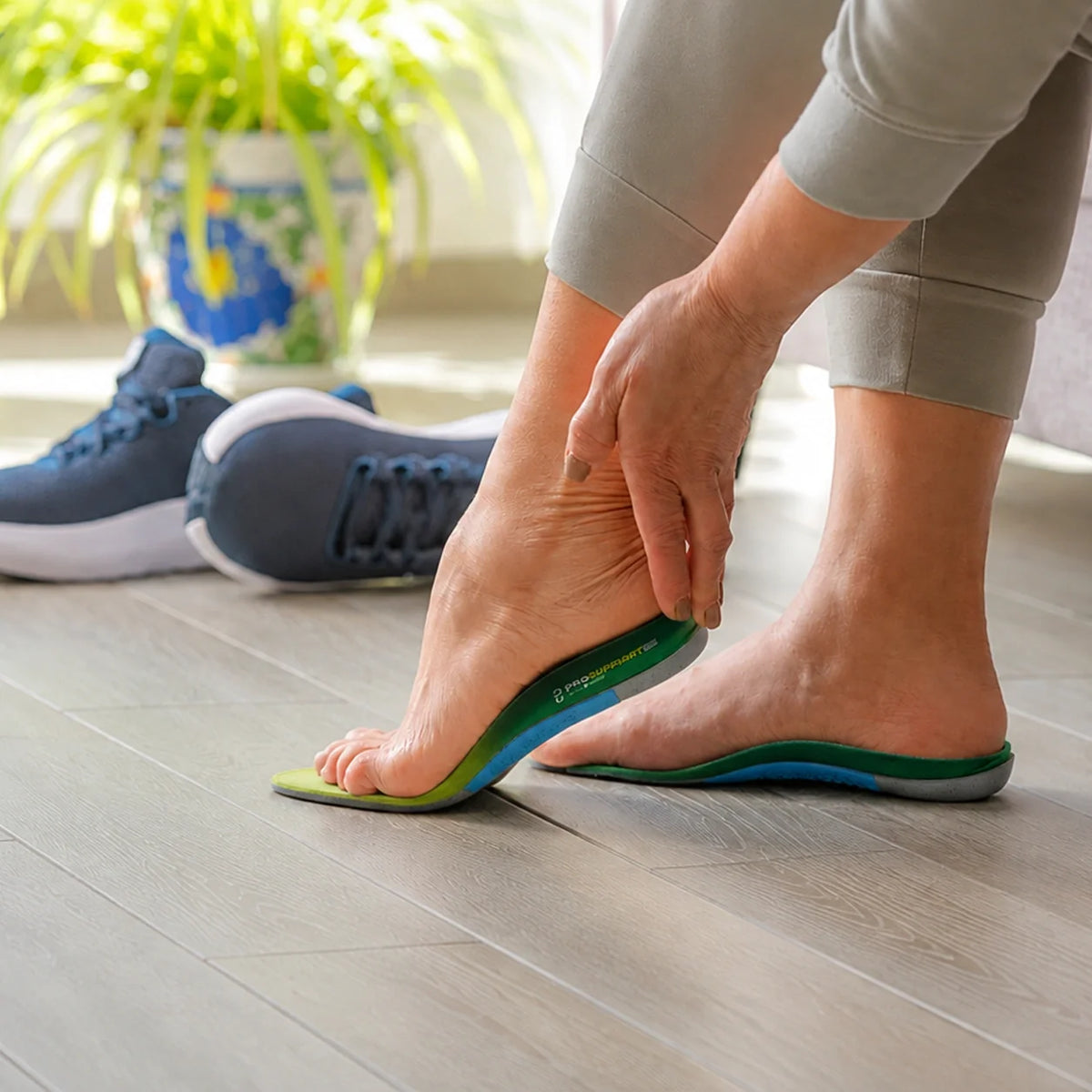
Soft arch insoles sit in between. They have a gentle arch shape and a heel cup, made from cushioning foam rather than a hard plastic shell, so they support the foot while still letting it bend and work.
Here is how the four options compare:
| Option | Cost | What it does | Who it's for | Watch out for |
|---|---|---|---|---|
| Factory school-shoe insert | Comes free with the shoe | Covers the stitching and adds a thin layer of cushion | Children with no complaints | Usually flat, thin foam that compresses quickly; little or no arch or heel cup |
| Gel or silicone insole | Usually a few hundred rupees | Cushions the sole and heel | Short-term cushioning on hard floors | Can feel heavy and hot, most have no arch shape, can slip in the shoe |
| Soft arch insole, such as Sprouts | ₹799 | Gentle arch support, deep heel cup and cushioning while worn | Flexible flat feet that get tired or achy in school or sports shoes, about ages 2 to 8 by shoe size | Doesn't change how the arch develops; replace when your child moves up a size |
| Custom orthotic | Usually several thousand rupees plus consultation fees; ask the clinic | Moulded to the child's foot to control specific movement | Diagnosed conditions, prescribed by a specialist | Outgrown quickly; no supporting evidence for healthy children with flexible flat feet |
Can wearing an arch support insole daily cause foot muscle weakness or dependency?
There is no good evidence that a soft, flexible insole weakens a child's feet, but the worry is fair, and it applies most to rigid devices that do the foot's work for it. Use support in shoes only when there's a reason, and keep plenty of barefoot time.
We looked hard for research in children that measured foot muscle strength with and without soft insoles, and couldn't find good-quality studies either way. What we did find is caution from clinicians. A briefing for NHS health professionals in East Lancashire warns that arch supports and exercises won't make an arch develop, and that arch supports may even get in the way of the foot muscles developing.
We take that seriously. Think of the difference between a plaster cast and a good pair of socks. A cast holds a limb still, and the muscles underneath get lazy. A sock just makes the shoe kinder. A rigid plastic shell sits closer to the cast end. A soft insole sits closer to the sock.
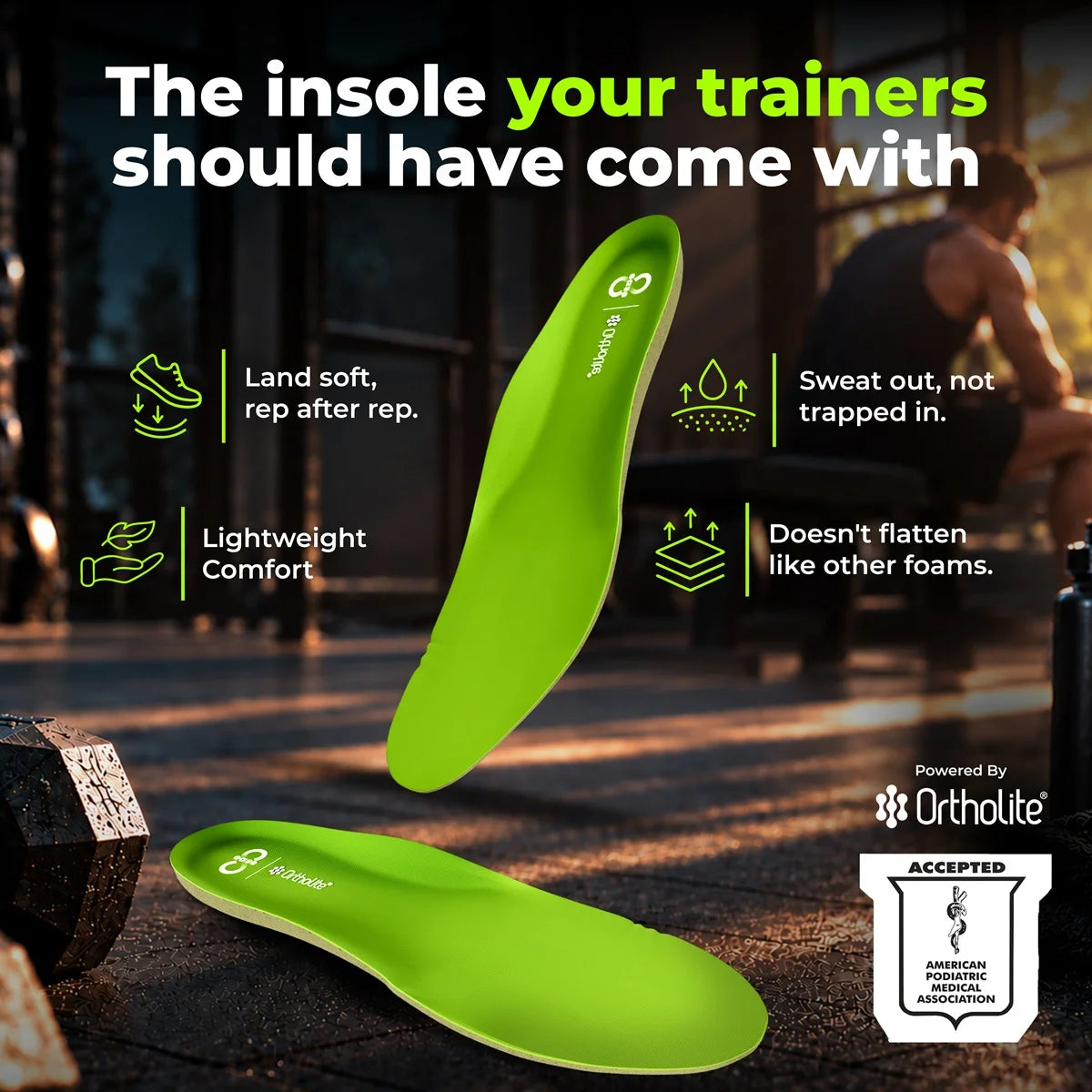
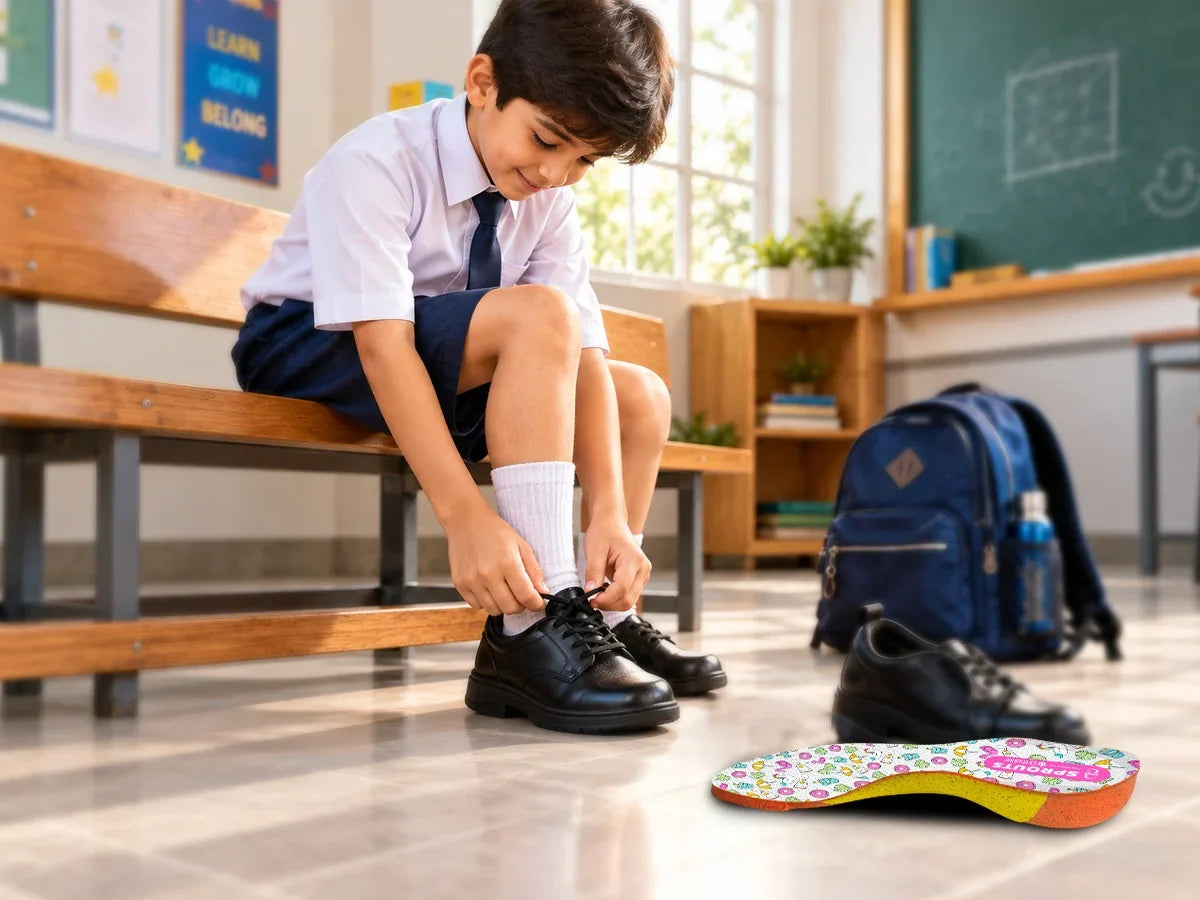
That thinking shaped how we designed Sprouts kids insoles. There is no rigid plastic shell. The arch is soft and flexible enough to bend in your hand, the heel cup is deep enough to steady the heel, and the OrthoLite® open-cell foam springs back with each step instead of going flat. The foot still bends, grips and pushes off. The insole just takes the edge off hard floors and stiff school shoes.

Whatever you choose, these habits keep a child's feet strong:
- Insoles stay in shoes. School shoes and sports shoes, yes. At home, bare feet.
- Barefoot time every day. On the tiled floor at home, on grass, on sand. We cover why in Barefoot or Shoes?
- A few minutes of foot games. Towel scrunches, marble pick-ups and tiptoe walking, all in our guide to flat feet in children.
- Running, climbing and play. Cricket in the lane and tag in the society compound do more for foot muscles than anything you can buy.
Who should NOT buy an arch support insole for their child?
If your child has no pain, no tiredness and plays happily, don't buy one. If they have pain, stiffness or one flat foot, see a doctor before buying anything.
Skip the insole if:
- Your child has flat feet but no complaints. A flexible, pain-free flat foot is normal and needs nothing.
- Your child is a baby or toddler just learning to walk. Bare feet and soft, flexible shoes are what help.
- You're hoping it will build an arch. It won't. Save your money.
- Your child has pain, a stiff foot, swelling or only one flat foot. That needs a paediatrician first, not a shop.
- The shoe is the real problem. A tight toe box, a worn-out sole or a shoe one size too small won't be fixed by an insole. Start with how to choose school shoes for kids.
- There's no size that fits. A wrong-sized insole bunches up and makes the shoe less comfortable, not more. Sprouts stop at Youth UK 1, our adult insoles start at UK 4, and we don't make a size for UK 2 yet.
How do I know if my child might benefit from a soft insole?
A soft insole is worth trying when a flexible flat foot is making your child tired or achy in shoes, and a doctor has found nothing else going on.
Signs that point that way:
- The arch appears when your child stands on tiptoe (the home test is in our flat feet guide).
- They complain of tired feet or legs after school, or want to be carried after short walks.
- They're sore after the PE period or weekend cricket, but fine after rest. If the soreness is in the heel, read heel pain in children after sport first.
- The factory insert in their school shoe is thin, flat and squashed.
- There are no red flags: no swelling, no limping, no pain at rest, no one-sided flat foot.
Which 8ease is right for your child?
| If this sounds like your child | Start with | Price |
|---|---|---|
| No pain, runs and plays happily | Nothing. Barefoot play at home | Free |
| Flexible flat feet, tired or achy after a school day, shoe size up to Youth UK 1 (about ages 2 to 8) | Sprouts kids insoles | ₹799 |
| Your child fits Sprouts, and your own feet ache after a day of standing too | Parent + Kid Duo | ₹1,279 |
| Older, sporty child in UK 4 to 7, sore after PE or practice | Sports Support Insole, size S | ₹649 |
| Pain, stiffness, swelling or one flat foot | A paediatrician first, no insole yet | Consultation fee |
Free delivery above ₹599. Cash on delivery available. 15-day easy returns.
When to see a doctor
- Pain in the feet, heels, ankles or legs that keeps coming back.
- Only one foot is flat, or a foot that had an arch is getting flatter.
- No arch appears when your child stands on tiptoe.
- Swelling, limping, or walking mostly on the toes.
- Foot trouble that stops your child running, playing or joining PE.
Your paediatrician can examine the foot and refer you to a paediatric orthopaedic doctor or a physiotherapist if needed.
Frequently asked questions
At what age can a child start wearing insoles?
There's no fixed age, but toddlers rarely need them. Go by shoe size rather than age: Sprouts start at UK kids 6, which most children reach around 2 or 3, and fit up to Youth UK 1. Many Indian children reach a size later than charts say, so check the school-shoe box or measure the foot.
Our doctor recommended insoles. Which kind should we buy?
Follow the doctor. If they prescribed custom orthotics for a diagnosed condition, get those. If they suggested soft arch support for comfort, a well-made off-the-shelf insole is fine. Take the insole to the next appointment so they can check it.
Can my child use the same insoles in school shoes and sports shoes?
Yes, if both shoes have a removable insole. Take out the factory insole first and never stack two insoles in one shoe, or the shoe gets too tight.
How often should kids' insoles be replaced?
About every six months, or sooner when your child moves up a shoe size. Replace them earlier if the foam looks squashed or the top cover is worn through.
Are "orthopaedic" school shoes worth the extra money?
For a child with flexible, pain-free flat feet, there's no evidence they change how the arch develops. In the Wenger study, corrective shoes made no difference over three years. Spend on good fit and a roomy toe box instead.
Will my child's flat feet get worse if we don't use an insole?
No good evidence says so. Most children's feet become less flat as they grow, insole or not. Watch for pain, stiffness or one-sided flattening, and see a doctor if any of those appear. If your child has a career in the forces in mind, read flat feet and the NDA, army and police medical.
My child says the new insoles feel strange. Is that normal?
Yes, for the first few days. Start with a few hours a day, then the full school day. If it still feels uncomfortable after a week, check the size and trimming. If the insole causes pain at any point, stop using it, and see a doctor if the pain continues.
This article is general information, not medical advice. If your child has pain that is severe, getting worse, only on one side, or stops them playing, please see a paediatrician.
Related reading
- Flat Feet in Children: What's Normal at Each Age, and When to See a Doctor
- How to Choose School Shoes for Kids: Toe Box, Sole and Fit for Indian Feet
- Barefoot or Shoes? What Grass, Sand and Barefoot Shoes Do for Your Child's Feet
- Heel Pain in Children After Sport: Sever's Disease, Growing Pains and What Helps
- Arch Support Insoles Explained: How They Work