

8ease Parent + Kid Duo — School Shoes for Them, Work Shoes for You
In stock, ready to ship today
Returns
Payments
Available
8ease Parent + Kid Duo — School Shoes for Them, Work Shoes for You
Extra 10% OFF on your first order
Use code FIRST10 at checkout

Ortholite® Foam

Soft Arch Support

Deep Heel Cup

Anti-Microbial
SECURED & TRUSTED CHECKOUT WITH:


Free delivery on orders above ₹499
7-day easy returns
100% secure payments
Delivered in 3–5 business days
8ease Parent + Kid Duo — School Shoes for Them, Work Shoes for You
If you have any questions, you are always welcome to contact us. We'll get back to you as soon as possible, within 24 hours on weekdays.
-
Shipping Information
Use this text to answer questions in as much detail as possible for your customers.
-
Customer Support
Use this text to answer questions in as much detail as possible for your customers.
-
FAQ’s
Use this text to answer questions in as much detail as possible for your customers.
-
Contact Us
Use this text to answer questions in as much detail as possible for your customers.

If you've searched this, you've found three articles that disagree. Here is the part they mostly agree on, said plainly: a flexible flat foot in a child is common, usually painless, and in most cases the arch develops on its own. It is not usually a reason for an insole, and a child who has never complained probably doesn't need one. We sell insoles. Telling you that costs us sales. We'd rather lose those than sell you a product on the back of a worry we manufactured.

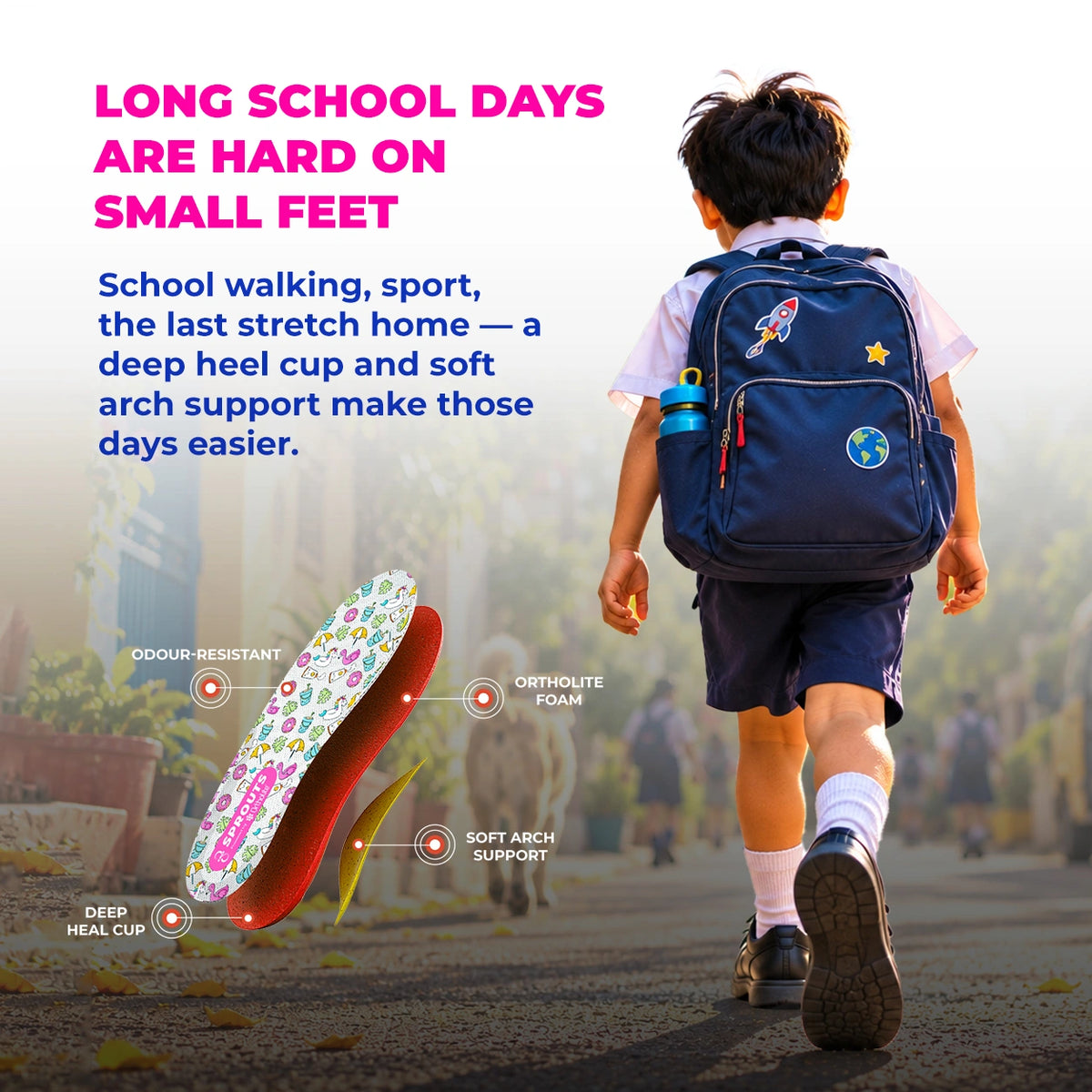
The question isn't the shape of the arch. It's whether the day is being affected. Children under about twelve rarely say "my feet hurt" — you get "it's too far", wanting to be carried the last stretch, shoes off the second they're through the door, a sudden drop in enthusiasm for a sport. One of those means nothing. Two or three, on the days with the most walking, is a pattern worth taking seriously. If the pain is in one foot only, wakes them at night, or comes with stiffness or swelling, see a doctor first — not us.

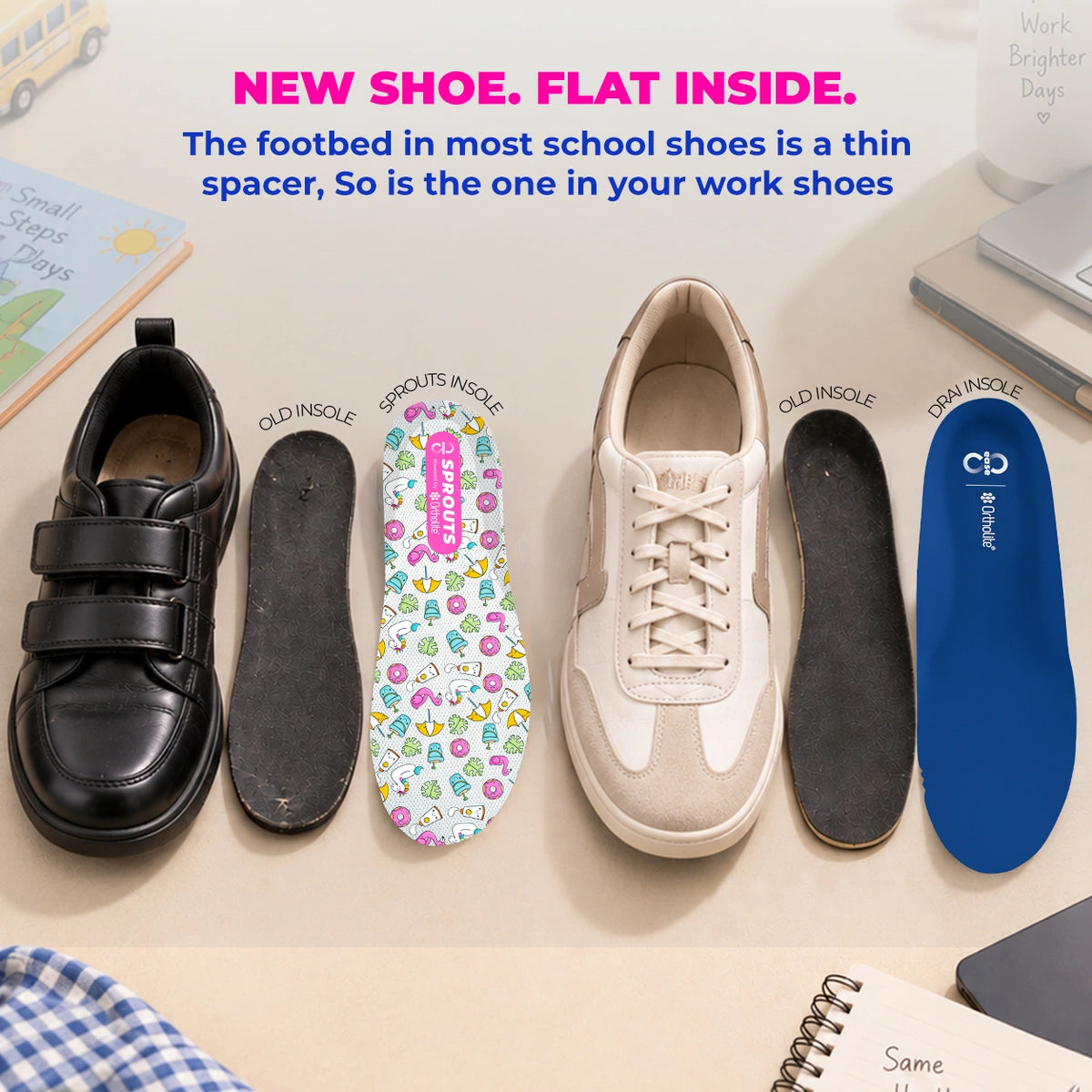
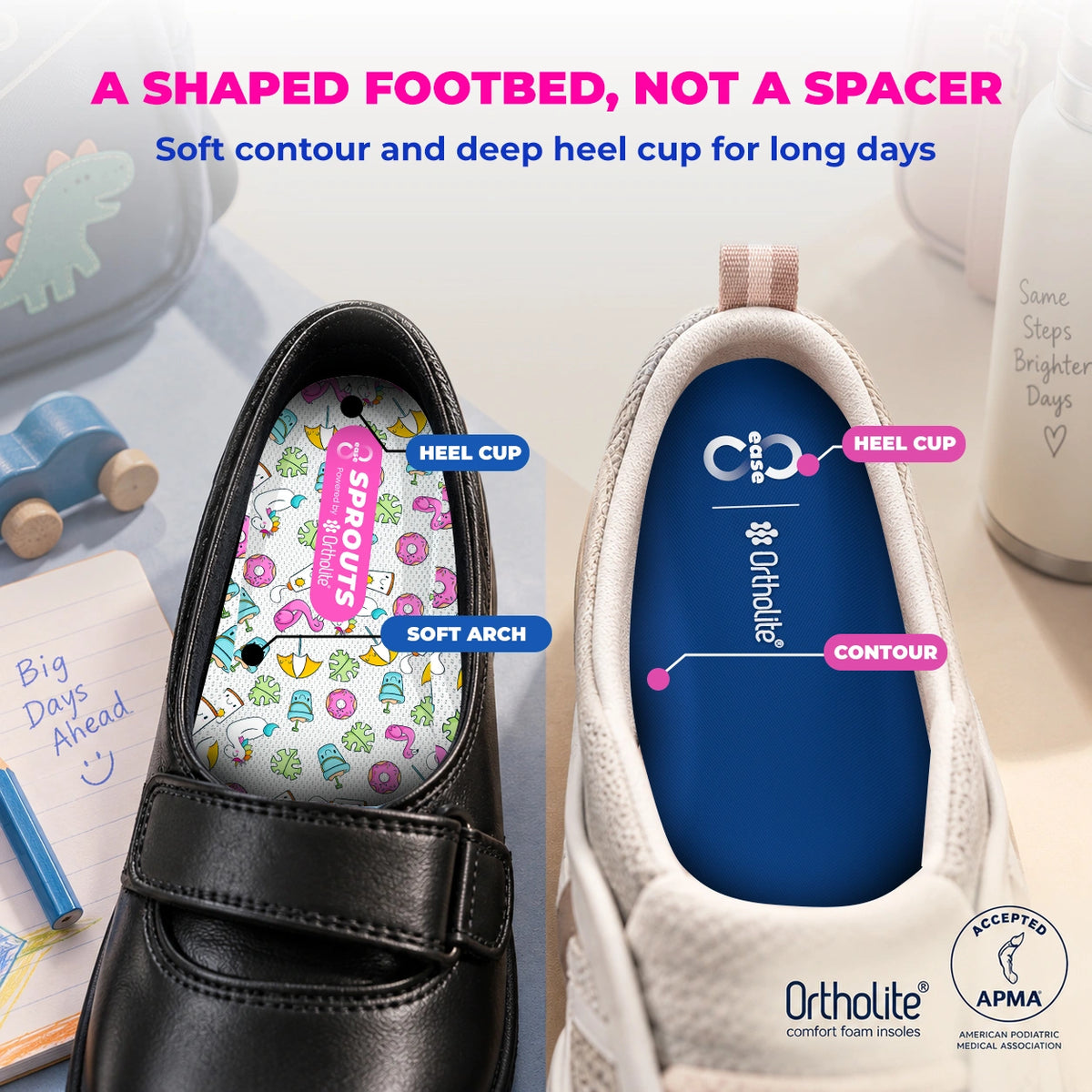
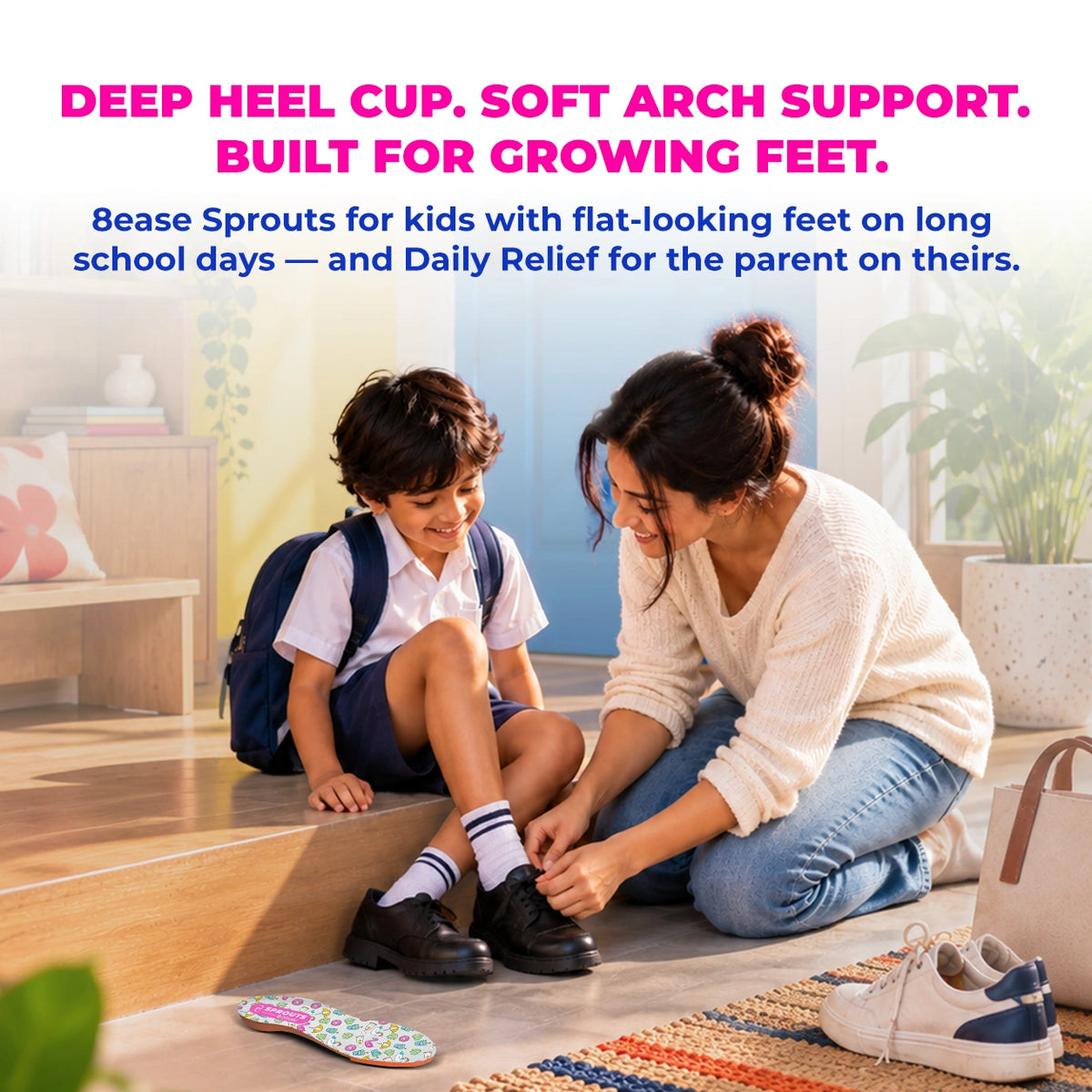
School shoes are built to a price and to survive a year. The footbed inside almost all of them is a thin die-cut spacer — its job is to cover the seam, not to support a foot. That's why the shoe can look almost new in October and feel completely flat inside. 8ease Sprouts replaces the spacer with a shaped footbed: a soft arch contour and a deep heel cup that spread load across more of the foot instead of concentrating it at the heel and the ball. It is a comfort product for long days, and that is the whole claim.

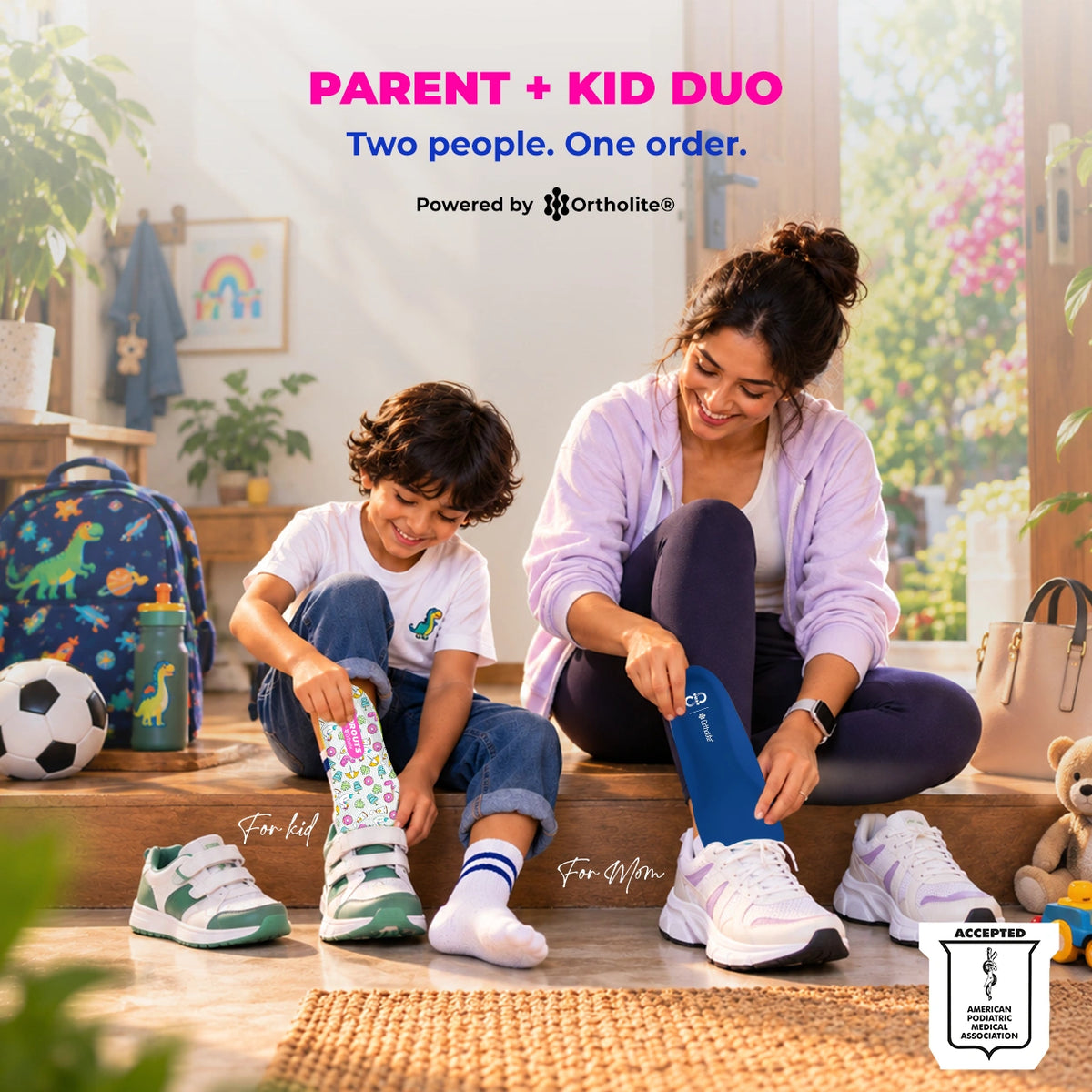
You've read this far about your child's feet. You are also standing all day — school run, kitchen, work, the shop, the stairs, back again. If you're the person who books everyone else's appointments, you are usually the last one to do anything about your own feet. That's why this is a duo. Daily Relief Arch is our everyday adult insole — arch support built for the 10,000-step day, in the formals, flats and commute shoes you actually wear. Buying it alongside means it isn't a separate decision you'll postpone again.
Built for the Days With the Most Walking
-

School Days
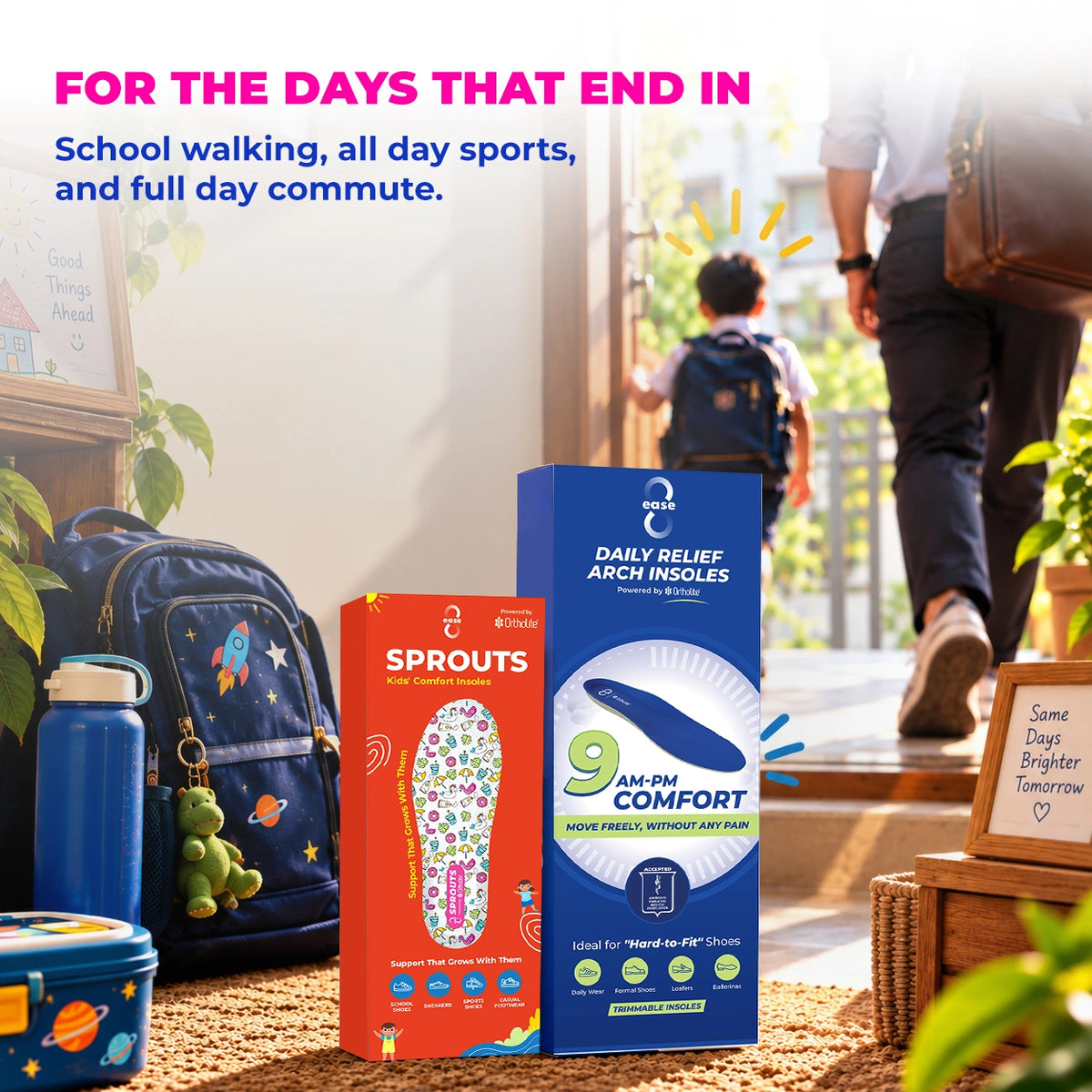
The walk in, the corridors, the walk home (Sprouts, in the school shoe) -

Sports Practice and PT
Trainers on turf, court or concrete (Sprouts, in the trainers) -

The school run and the working day
Standing, commuting, the shop, the stairs (Daily Relief Arch) -

Evenings on Hard Floors
Kitchen, chores, the last two hours before everyone sleeps (Daily Relief Arch)


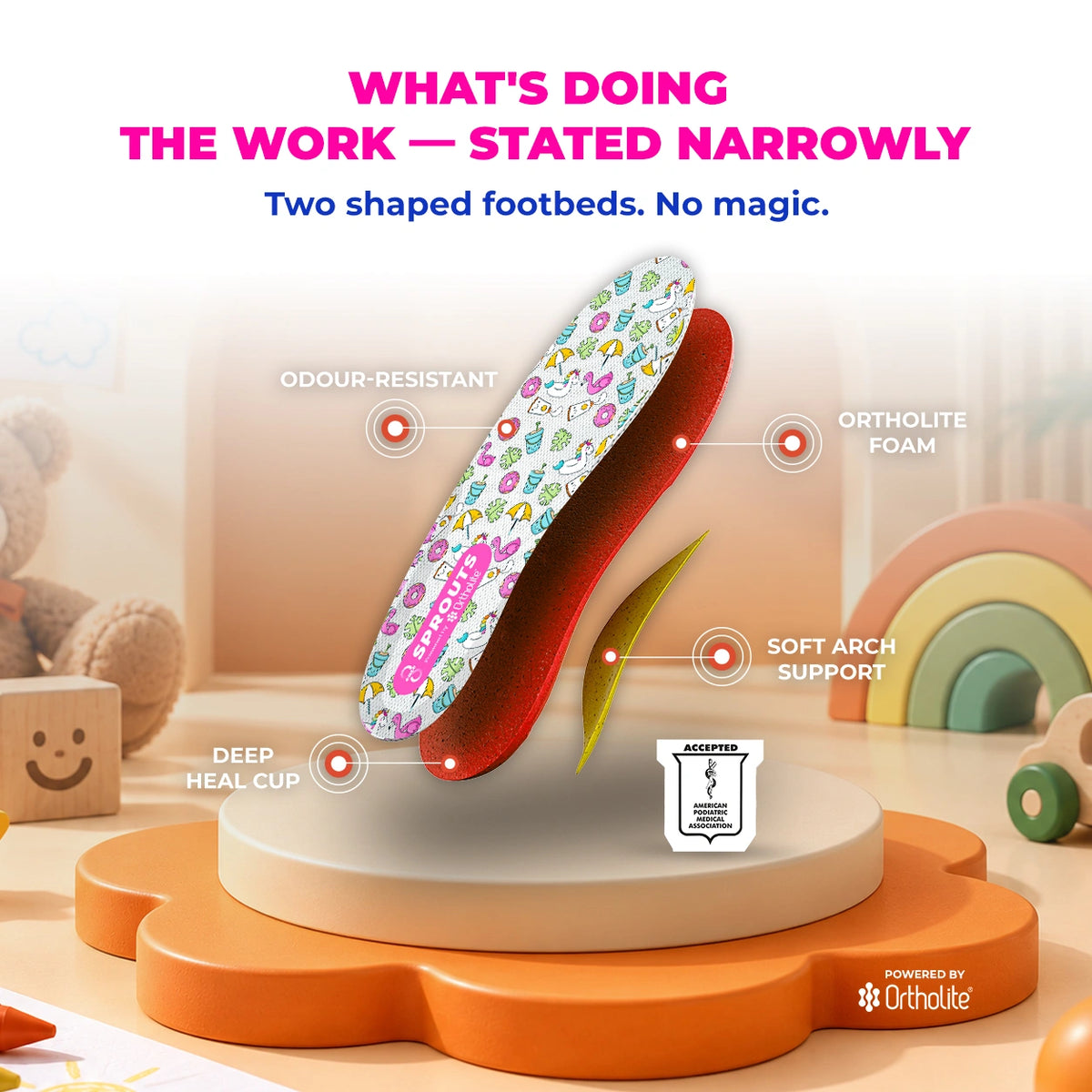
What's Doing the Work — Stated Narrowly
Neither insole in this duo changes the shape of anything, and neither changes how an arch develops. Anyone selling you a child's insole on that basis is telling you something the evidence doesn't support. What both do is replace a flat spacer with a shaped, cushioned footbed for the hours a foot is being asked to do the most.
8ease Sprouts — a Footbed Sized for a Growing Foot
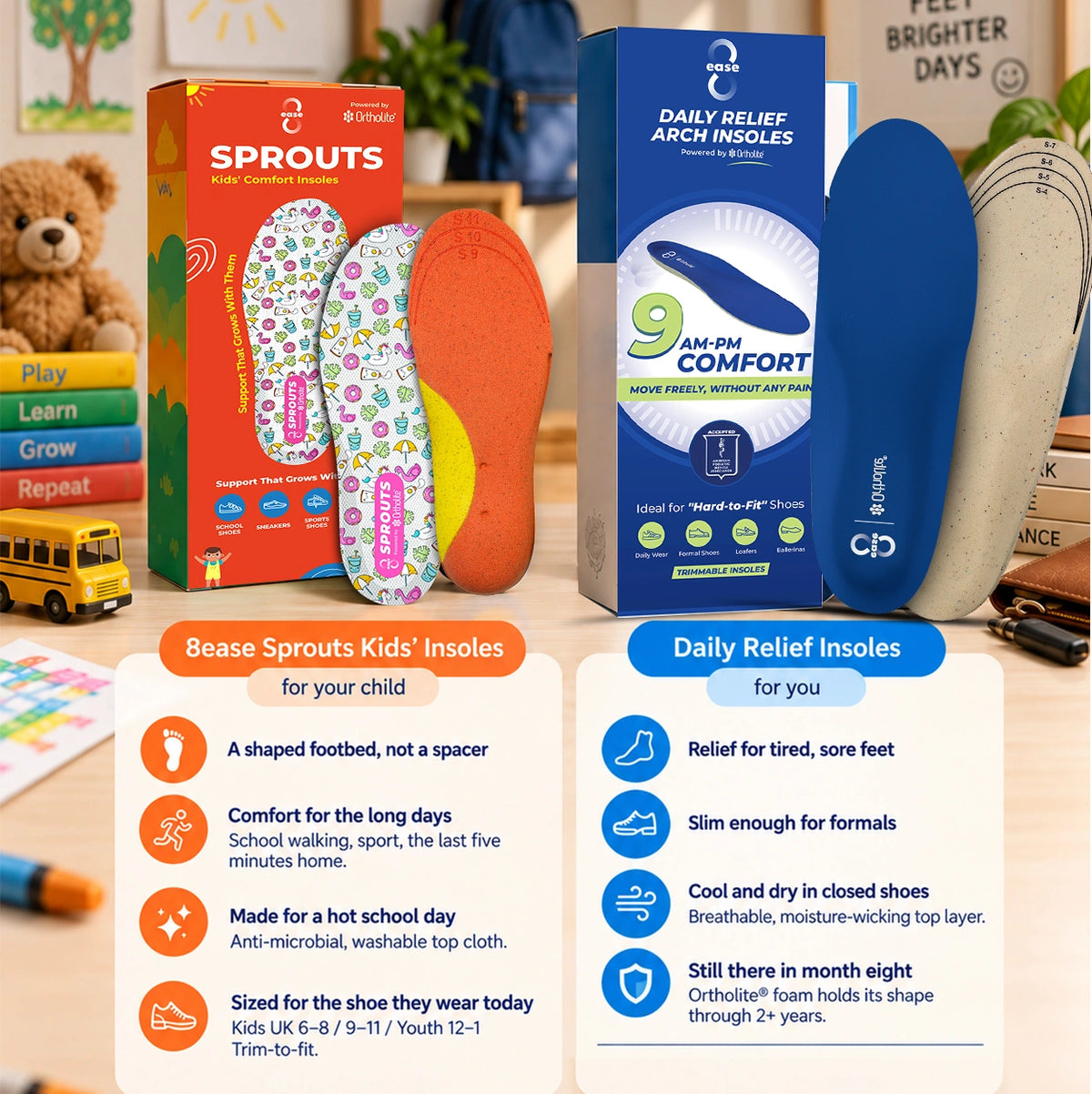
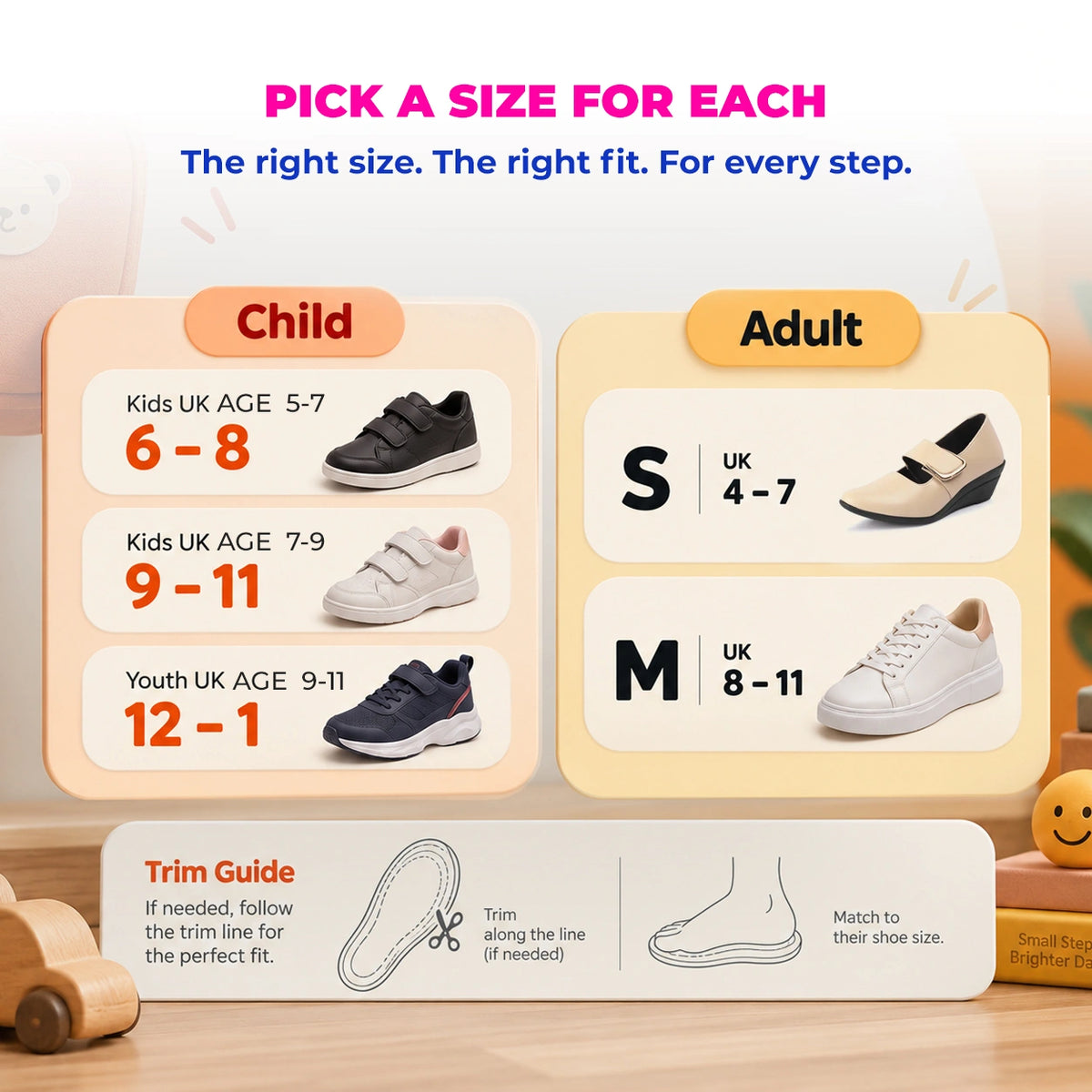
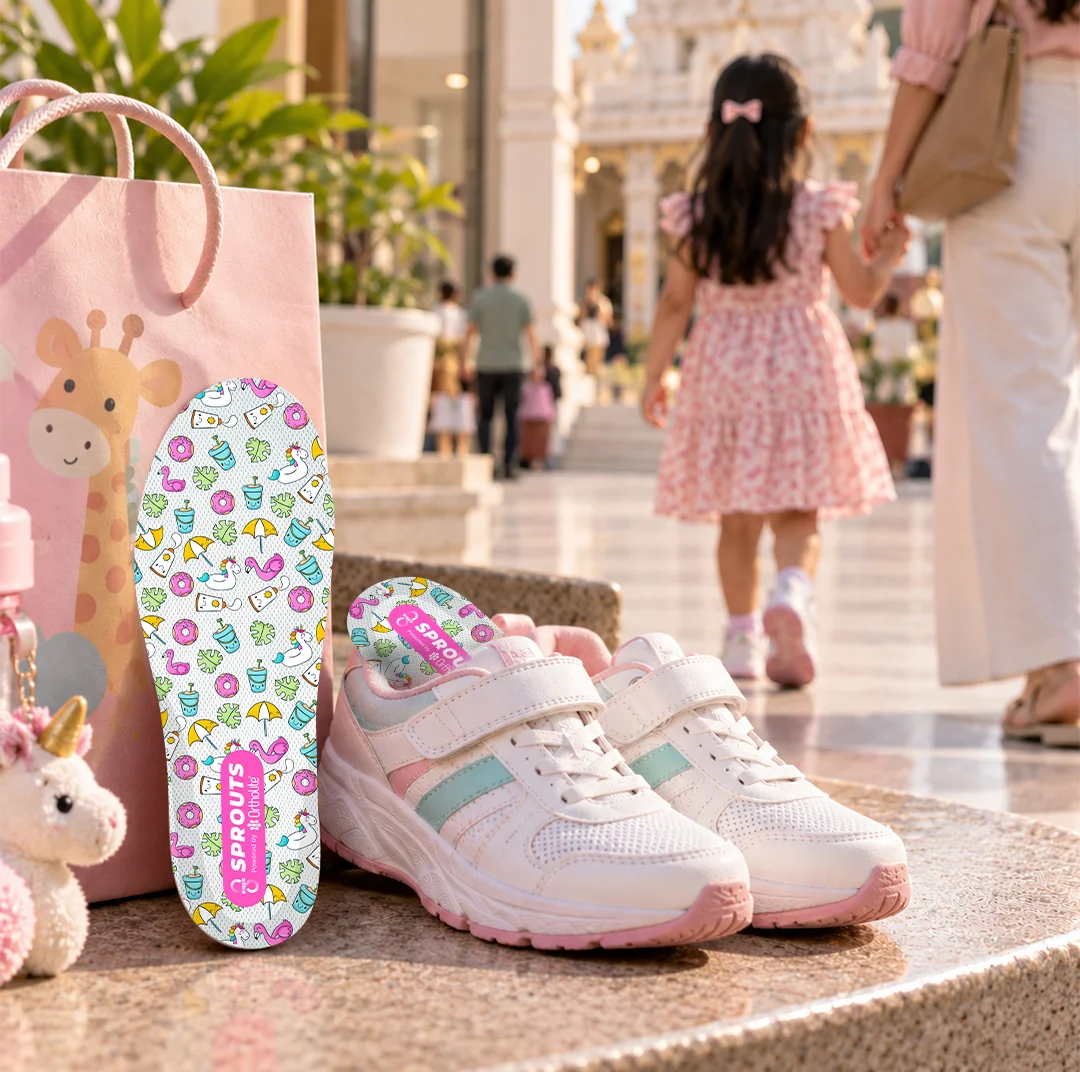
A soft arch contour and a deep heel cup, on a cushioned base, with an anti-microbial washable top cloth for feet that live in closed school shoes through an Indian afternoon. It trims to marked guide lines, which stretches one size a little further than a fixed footbed would. Sized in kids' and youth bands, chosen to the shoe they wear today.
Daily Relief Arch — Ortholite® Open-Cell Foam for the Adult
The adult pair is built on Ortholite® open-cell PU foam — the footbed material inside footwear from 500+ global brands — which Ortholite states compresses less than 5% over the life of the product. Not memory foam, not gel: it springs back after each step instead of packing down into a flat layer. It carries the APMA Seal of Acceptance for promoting good foot health, holds its arch shape through 2+ years of daily use, and machine washes.
Breathable, Washable, Both of Them
School shoes and office shoes are both closed shoes in a hot country. Both insoles use a moisture-wicking top layer that pulls sweat off the skin, and both go in the washing machine when a term or a fortnight has taken its toll. Air-dry flat; back in the shoe by morning.
A Calm Friend Who Knows Feet — Not a Clinic
Most brands selling to parents sell fear: a diagram, a warning, a countdown. We won't. A flat-looking arch in a child usually needs nothing, and this page says so before it sells you anything. What it makes instead is a narrow, honest case: on the days with the most walking, a shaped footbed is more comfortable than a die-cut spacer, for a child and for the adult standing next to them. Two pairs sized to two different people, terms that survive a wrong guess, and a WhatsApp line where "is this even the right thing for my kid?" is a completely fine question to send.
Comparison Table
| Feature | The footbed that came with the shoe | Parent + Kid Duo |
|---|---|---|
| What it is | A thin die-cut spacer covering the seam | ✓ A shaped footbed with arch contour and heel cup |
| Sizing | Whatever came in the box | ✓ Child and adult bands, chosen separately, trim-to-fit |
| Life | Flat by mid-term, before the shoe looks worn | ✓ Sprouts trims to fit and machine washes; Daily Relief holds its arch shape through 2+ years |
| Heat | Traps it | ✓ Moisture-wicking, washable top layer on both |
| Claims | None — and none needed | ✓ Comfort on long days. Nothing about growth or shape, because that isn't what insoles do |
Frequently asked questions (FAQ)
Will this change the shape of my child's feet?
No, and nothing sold as an insole will. Most flexible flat feet in children resolve on their own without intervention. Sprouts is a comfort product for long days.
My paediatrician said wait and watch. Does this contradict that?
No. Wait-and-watch is about the arch developing. A comfort insole for the days with a lot of walking doesn't interfere with that, and it isn't a treatment.
How do I choose the size for a child who isn't standing next to me?
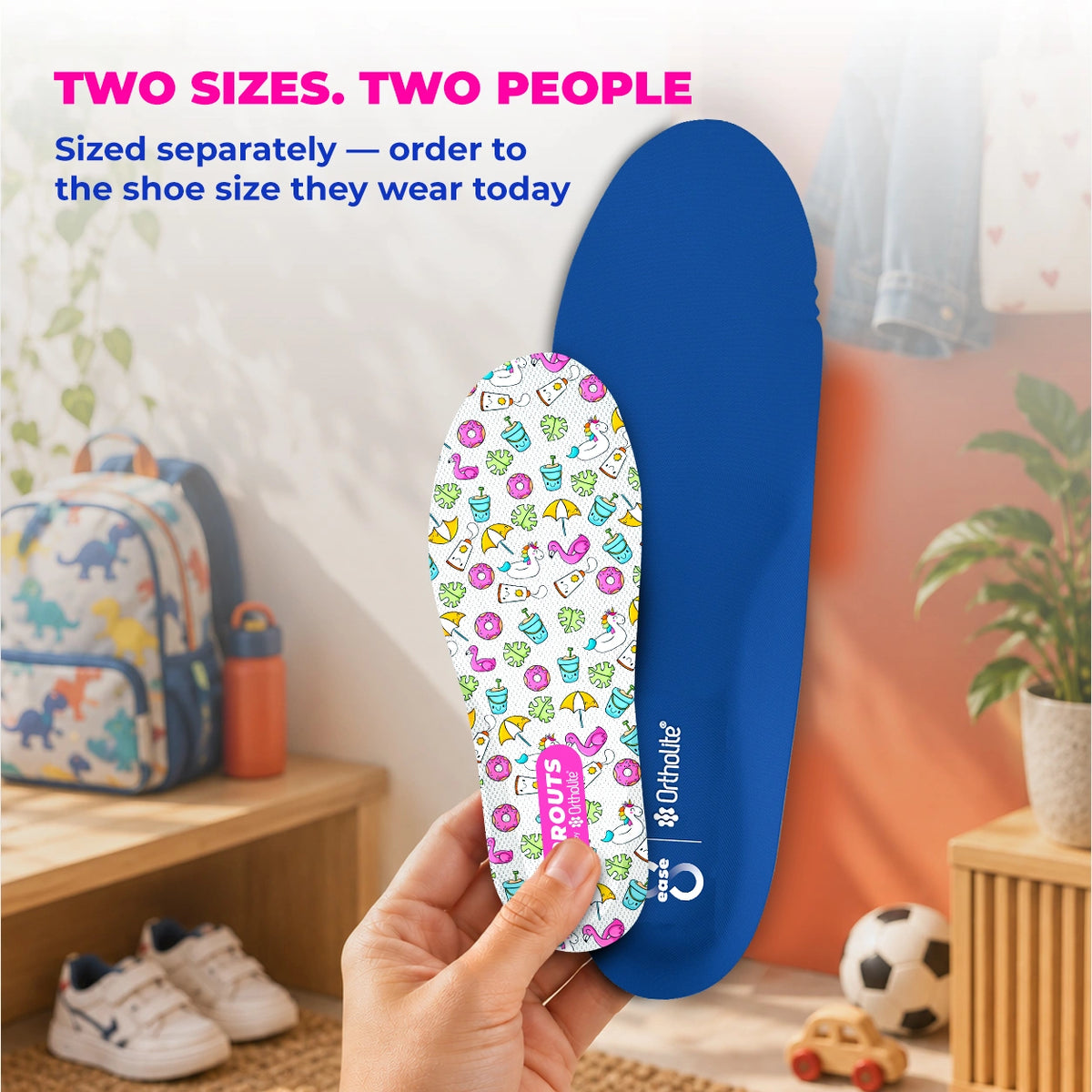
Order to the UK shoe size they wear now — it's printed inside their school shoe — not the one they'll grow into. Sprouts trims to marked guide lines, which absorbs most of the length risk. If it's wrong, exchange it within 7 days. No argument, no photographs of the packaging.
How often will a child need a new size?
Roughly with each shoe size, so once or twice a year between 6 and 12. Trim-to-fit stretches one size a little further than a fixed footbed would.
Can Sprouts go in school shoes?
Yes, and that's the main use. Take the existing liner out first if the shoe has one — don't stack them.
Do I pick one size for both products?
No. Sprouts is Kids UK 6–8 / Kids UK 9–11 / Youth UK 12–1. Daily Relief is S (UK 4–7) / M (UK 8–11). Chosen separately at checkout — the selector calls them 'child' and 'adult' so nothing gets mixed up.
Is the saving real?
₹1,248 if you buy both separately, ₹1,099 together. Open either product page and check.
Is Cash on Delivery available?
Yes, across India. There is a ₹50 handling fee plus delivery on COD orders. Prepaid orders above ₹599 ship free.
Can I ask before I buy?
Yes — WhatsApp is our main support channel, and "is this even the right thing for my kid?" is a completely fine question to send. We'll tell you if it isn't.
What does APMA Accepted mean?
The APMA Seal of Acceptance indicates that this product has been reviewed and found to be acceptable in promoting good foot health. The APMA does not endorse or recommend specific products or treatments. On this page the seal applies to the Daily Relief Arch Insoles.
Two children?
The Sprouts Sibling Pack (₹1,399) is two children's pairs, each size picked separately.
One Order. Two People. One Thing Off the List.
Free delivery on prepaid above ₹599 · COD available (₹50 fee + delivery) · 7-day easy exchange
