
It's Sunday evening. Your nine-year-old has spent the afternoon playing cricket in the lane, then a football match on the dry, hard maidan. Now he's limping to the dinner table and says his heel hurts. Both heels, actually.
Next morning he tiptoes to the bathroom. By lunch he's running about as if nothing happened. Then Tuesday's football coaching comes round, and the limp is back.
Nani says it's growing pains. The coach says shake it off. You're left wondering whether to keep him home or let him play.
Here's the reassuring part. Heel pain after sport in this age group is very common, it has a name, and it almost always settles on its own with a few simple changes.
Why does my 9-year-old get heel pain only after football or cricket?
The most likely reason is Sever's disease, an irritation of the growth plate at the back of the heel that hurts during or after running and jumping, and eases with rest. NHS paediatric physiotherapists describe it as probably the most common cause of heel pain in children.
At the back of a child's heel bone sits a growth plate, a softer strip where new bone is still being made. During a growth spurt, bones can grow faster than the calf muscles and the Achilles tendon (the thick cord at the back of the ankle). The tendon gets tight and tugs on that growth plate.
Every sprint, jump and hard landing adds another tug. The result? A sore, bruised-feeling heel that follows sport and fades with rest. Your child isn't imagining it.
Who gets it most?
East Lancashire NHS physiotherapists say boys around 8 to 10 and girls around 10 to 12. NHS Scotland says 8 to 14, and the American Academy of Pediatrics says 9 to 13 for young athletes.
Very active children get it most, especially in running and jumping sports: football, cricket, badminton, athletics and the PE period, often on concrete, cement pitches or a maidan baked dry by summer. Thin, flat-soled shoes and football studs are mentioned as triggers too.
What is Sever's disease, and does it go away on its own?
Despite the name, it's not really a disease, and yes, it goes away on its own once the heel stops growing. NHS Scotland calls it "only temporary" with "no long-term effects".
The heel growth plate usually fuses with the rest of the heel bone around the age of 15. After that, Sever's can't come back.
Before then, a bout can last a few weeks to a few months, and it can flare up again with the next growth spurt. KidsHealth notes that with rest, symptoms usually improve within two weeks to two months.
Doctors usually recognise it from the story and a quick examination. A common check is gently squeezing the heel from both sides; with Sever's, that hurts. X-rays usually aren't needed to diagnose it, though a doctor may order one to rule out other problems.
Is it Sever's disease, growing pains or something else?
Location and timing tell you most of it: Sever's hurts at the back of the heel during or after activity, while growing pains are an ache in both legs in the evening or at night. Anything that doesn't fit either pattern deserves a doctor's look.
The NHS says growing pains are common between about 3 and 12 and usually gone by morning, with no limp.
| Sever's disease | Growing pains | Something else (see a doctor) | |
|---|---|---|---|
| Where it hurts | Back and sides of the heel, one or both feet | Both legs, a general ache or throb rather than one spot | One specific spot, one joint, or one leg only |
| When | During or after running and jumping; eases with rest | Evening or night; gone by morning | Constant pain, pain that wakes them, pain in the morning that doesn't ease |
| Typical age | About 8 to 14 | About 3 to 12 | Any age, especially heel pain in a child under 7 |
| Limp | Often a limp or tiptoe walking after sport | No limp | A limp with no sport to explain it |
| Red flags | Swelling that doesn't settle with rest | Pain in one leg only, or with fever or rash | Fever, redness and heat, swelling, a fall or twist, not able to walk on it |
Why does my child limp or walk on tiptoes in the morning?
Walking on tiptoes keeps weight off a sore heel, and with Sever's the heel and calf often feel stiff first thing after sleep. The stiffness usually loosens as your child moves about.
The NHS Scotland leaflet lists stiffness or discomfort after sleep among the symptoms, alongside limping and tiptoe walking. A tight calf overnight, then that first step onto a cold marble floor, is a fair description of why mornings are worst.
Two caveats matter here:
- Stiffness that lasts well into the day, or swollen joints, is different. Children's physiotherapists list early morning stiffness as a warning sign for joint inflammation. Get it checked.
- A child who has always walked on their toes, since toddler days and not just after sport, is a separate question. We cover that in why some children walk on their toes or trip often.
What actually helps heel pain after sport?
Cut back on running and jumping until it settles, ice the heel after activity, stretch the calves daily, cushion the heel and wear supportive sports shoes. That's the standard advice across the NHS and paediatric leaflets we checked.
Change the activity, don't stop all activity
NHS Scotland advises staying as active as pain allows. Complete bed rest isn't the goal.
- Cut back on the painful bits. Fewer sprints and jumps for a while. Swimming and cycling put far less load on the heel.
- One running sport at a time, as the American Academy of Pediatrics suggests. Cricket academy, school football and summer camp in one week is a lot of pounding.
- Talk to the coach, and return gradually once running no longer hurts.
Ice after activity
Wrap ice in a thin towel or damp cloth, never straight on the skin, and hold it on the heel for about 10 to 20 minutes after sport. A packet of frozen peas from the freezer moulds nicely around a heel.
Calf stretches every day
A tight calf is part of the cause, so stretching is a big part of the fix. The NHS leaflets suggest holding each stretch for about 30 to 40 seconds, repeating 3 or 4 times, two or three times a day.
- Towel stretch (best first thing in the morning): sit with legs straight, loop a towel or dupatta round the ball of the foot and gently pull the toes towards you.
- Wall lean: hands on the wall, one foot back, back heel pressed down, lean forward until the calf feels a stretch.
- Step heel drop: stand on a stair with heels hanging off the edge and let them sink slowly.
Stretches should feel like a pull, never sharp pain.
Cushion the heel and fix the shoes
East Lancashire NHS advises supportive, well-cushioned shoes with the laces done up, and choosing proper running shoes over flat canvas sneakers. Both NHS leaflets mention gel heel cups for cushioning, especially during sport.
The East Lancashire leaflet also advises avoiding activities in bare feet while it hurts. For Indian homes, that's worth taking seriously: a sore heel on marble and tiled floors all evening gets no break. Barefoot cricket on a concrete lane is the hardest of all.
Pain relief such as paracetamol or ibuprofen can help for a short time. Check the dose with your paediatrician or chemist.
Mistakes to avoid
- Pushing through because the tournament is next week. Pain is the signal to ease off.
- Shoes that are too small. A cramped heel presses right on the sore spot. See how to choose school shoes for kids.
- Stacking insoles. Take the factory insole out first.
- Blaming it all on flat feet. The leaflets we checked put Sever's down to growth, tight calves and repeated pounding, not foot shape. Unsure about the arches? Read flat feet in children: what's normal at each age.
Are heel cups or silicone cushions effective for school shoes?
They can help: cushioning under the heel is part of the standard advice for Sever's disease, and it's low-risk. What a heel cup won't do is change the growth plate or make the condition end sooner. Time and less pounding do that.
The best evidence we found is a 2016 trial in the British Journal of Sports Medicine of 124 children aged 8 to 14 with Sever's. It compared a simple heel raise with ready-made orthotic insoles, with and without new shoes. Heel raises came out slightly ahead at two months; by 12 months, no option beat the others. So choose something comfortable, affordable and easy to move between shoes.
For Indian school shoes:
- Watch the fit. Black school shoes are often shallow at the heel. A thick cup can lift the heel so it slips out. If the heel pops up when they walk, the pad is too thick for that shoe.
- Use a pair. One pad in each shoe keeps both heels at the same height, even if only one heel hurts.
- Gel or foam? Silicone and gel pads are slim and firm but can feel hot and sweaty in our summers. Foam is lighter and breathes better.
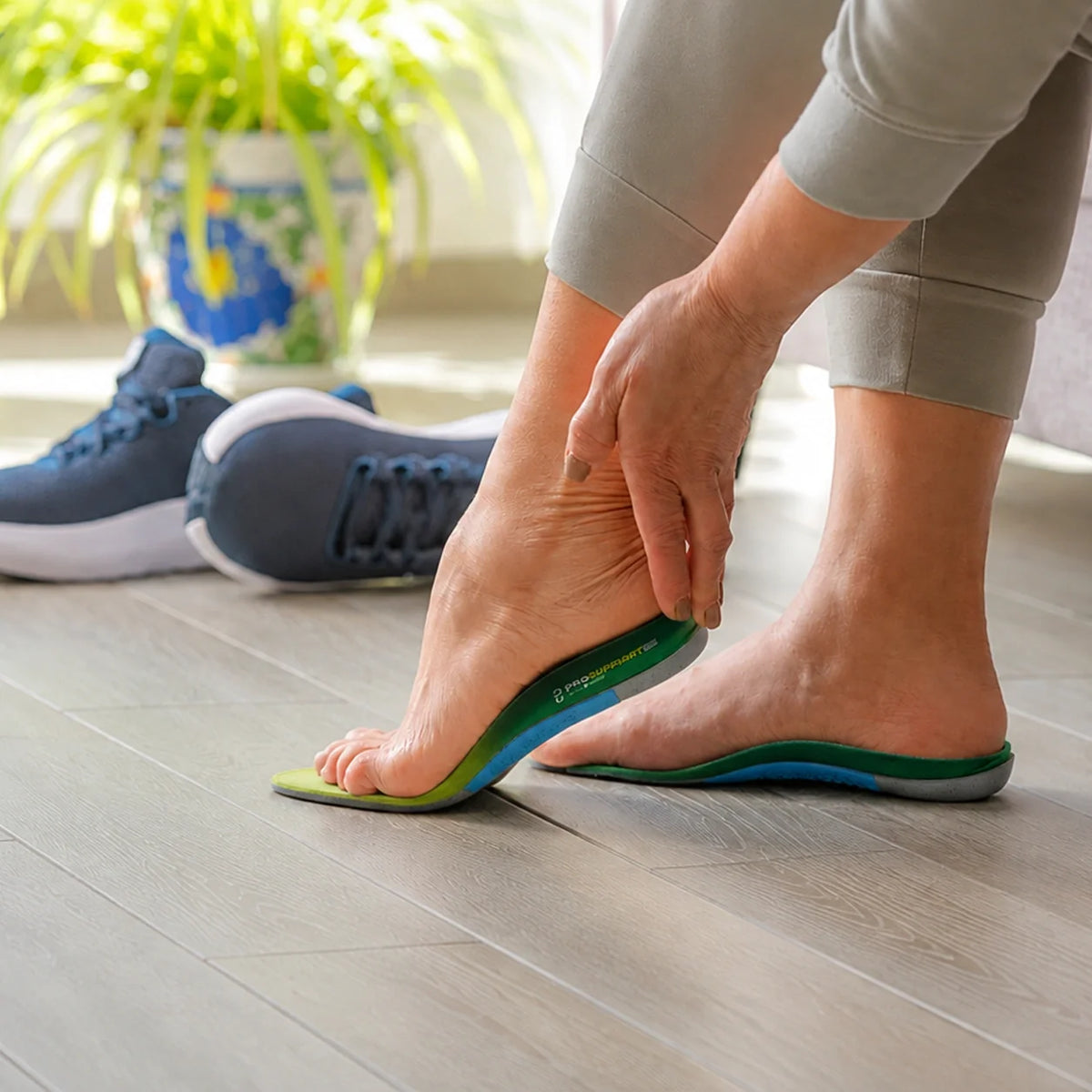
For children in UK size 3 and up, our ComfortStep Heel Pads in size S (UK 3 to 6) are a cushioned PU foam heel pad with an anti-slip base, made to sit in school shoes and sports shoes. They cost ₹279 a pair and can move between shoes.
Which size fits a child with heel pain?
Go by the UK size on the school-shoe box or foot length, not by age. Most children with Sever's disease are about 8 to 14, and most of them have already outgrown kids' insole sizes.
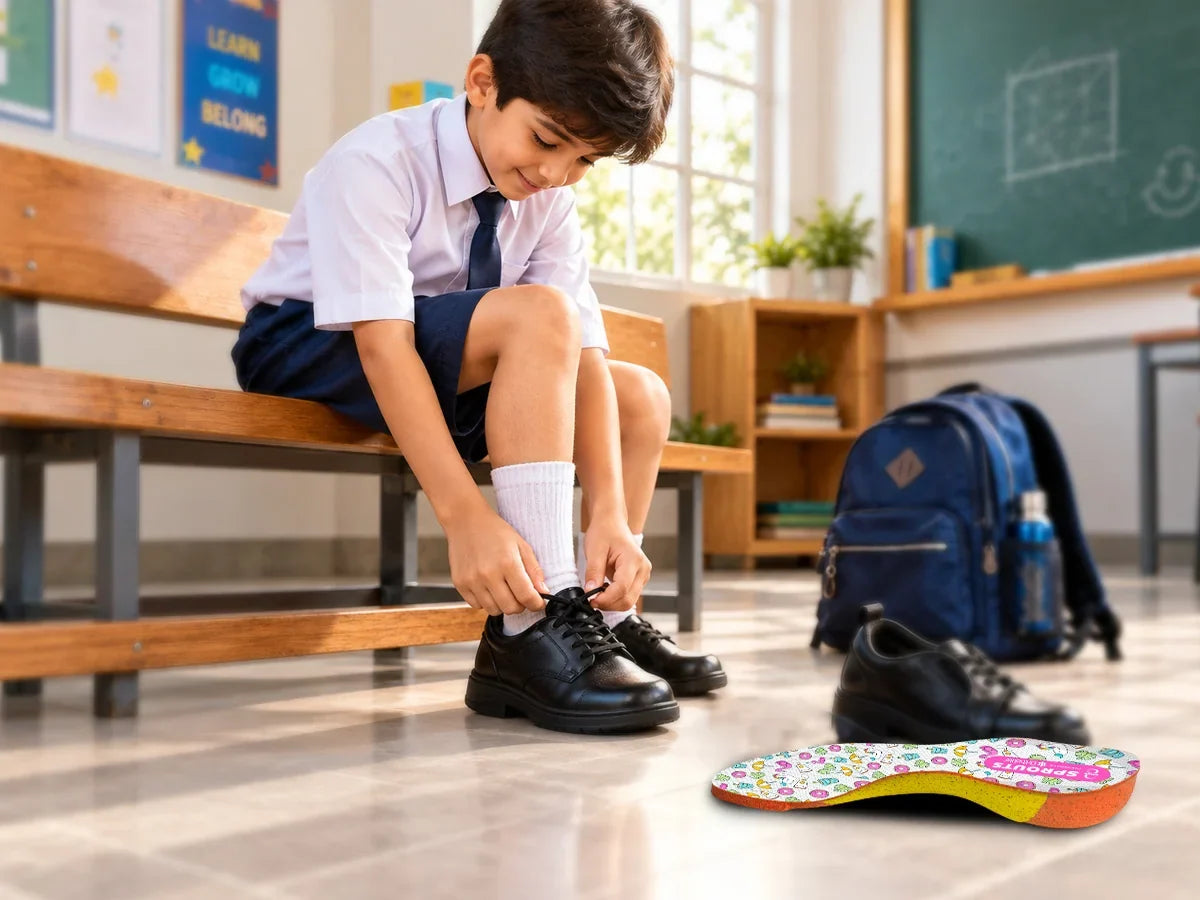
Our Sprouts kids insoles fit only younger children, from UK kids 6 up to Youth UK 1 (roughly ages 2 to 8, though many Indian children reach a size later than charts say). They are not a treatment for heel pain. They suit a younger child whose feet simply get tired after long days in hard school shoes: the deep heel cup cradles the heel and the OrthoLite® foam cushions each landing. Sever's is unusual under 8, so heel pain that keeps coming back in a little one needs a paediatrician first, not an insole.

For older children:
- UK 2: we don't make a size for UK 2 yet. A well-cushioned sports shoe with a firm heel is the best start.
- UK 3 and up: ComfortStep Heel Pads S cushion the heel in school shoes.
- UK 4 to 7: for football, cricket and running, the Sports Support Insole in adult size S (UK 4 to 7) cushions the heel inside sports shoes.
If your child's feet roll inward too, or their shoes wear down on the inside edge, see what ankles rolling in means for your child.
Which 8ease is right for your child?
| If this sounds like your child | Start with | Price |
|---|---|---|
| No heel pain, runs and plays happily | Nothing extra. Well-fitting, cushioned shoes | Free |
| Younger child, up to Youth UK 1, no heel pain but tired feet after long school days | Sprouts kids insoles | ₹799 |
| Child under 8 with heel pain that keeps coming back | A paediatrician first, no insole yet | Consultation fee |
| UK 3 to 6, heel sore after football or cricket, in school or sports shoes | ComfortStep Heel Pads, size S | ₹279 |
| UK 4 to 7, plays sport several times a week | Sports Support Insole, size S | ₹649 |
If your child is in UK 2, we don't make a size for them yet; a well-cushioned sports shoe is the best start.
Free delivery above ₹599. Cash on delivery available. 15-day easy returns.
When to see a doctor
- Pain in only one heel that isn't settling
- Pain at night, or pain that wakes your child
- Swelling, redness, warmth or a fever
- Pain that started after a fall, a twist or a hard landing
- Your child can't put weight on the foot, or limps with no sport to explain it
- Heel pain in a child under 7, or outside the usual 8 to 14 window
- No improvement after two or three weeks of less sport, ice and stretches
- Morning stiffness that lasts, or swelling in other joints
Frequently asked questions
Should my child stop playing cricket and football completely?
Usually not. Cut back on running and jumping until it eases, swap in swimming or cycling, then build back up once sport no longer hurts. Your paediatrician or physiotherapist can guide the timing.
How long does Sever's disease last?
A bout often settles within a few weeks to a couple of months with less pounding, ice and stretches. It can return with growth spurts, and stops for good once the heel growth plate fuses, around age 15.
Will my child need an X-ray?
Often not. Doctors usually recognise Sever's from where it hurts and a simple squeeze test. They may order an X-ray if something doesn't fit, for example pain after an injury or pain on one side only.
Is heel pain in children the same as plantar fasciitis in adults?
Not usually. Sever's sits at the back and sides of the heel, where the Achilles tendon pulls on the growth plate. If the pain is under the heel or along the arch, mention that to your doctor.
Can my child just wear my adult heel pads?
Only if the size matches their shoe. An oversized pad bunches up and can push the heel out of the shoe. ComfortStep size S fits from UK 3; below that, start with a well-fitting, cushioned shoe.
This article is general information, not medical advice. If your child has pain that is severe, getting worse, only on one side, or stops them playing, please see a paediatrician.
Related reading
- Flat Feet in Children: What's Normal at Each Age, and When to See a Doctor
- How to Choose School Shoes for Kids: Toe Box, Sole and Fit for Indian Feet
- Ankles Rolling In and Shoes Worn on the Inside Edge: What It Means for Your Child
- Why Does My Child Walk on Toes, Trip Often or Point Their Feet Inward?