
He was eleven when he first said it at the dinner table: "I'm going to join the NDA." Since then the posters have gone up and he runs laps of the colony every morning before school.
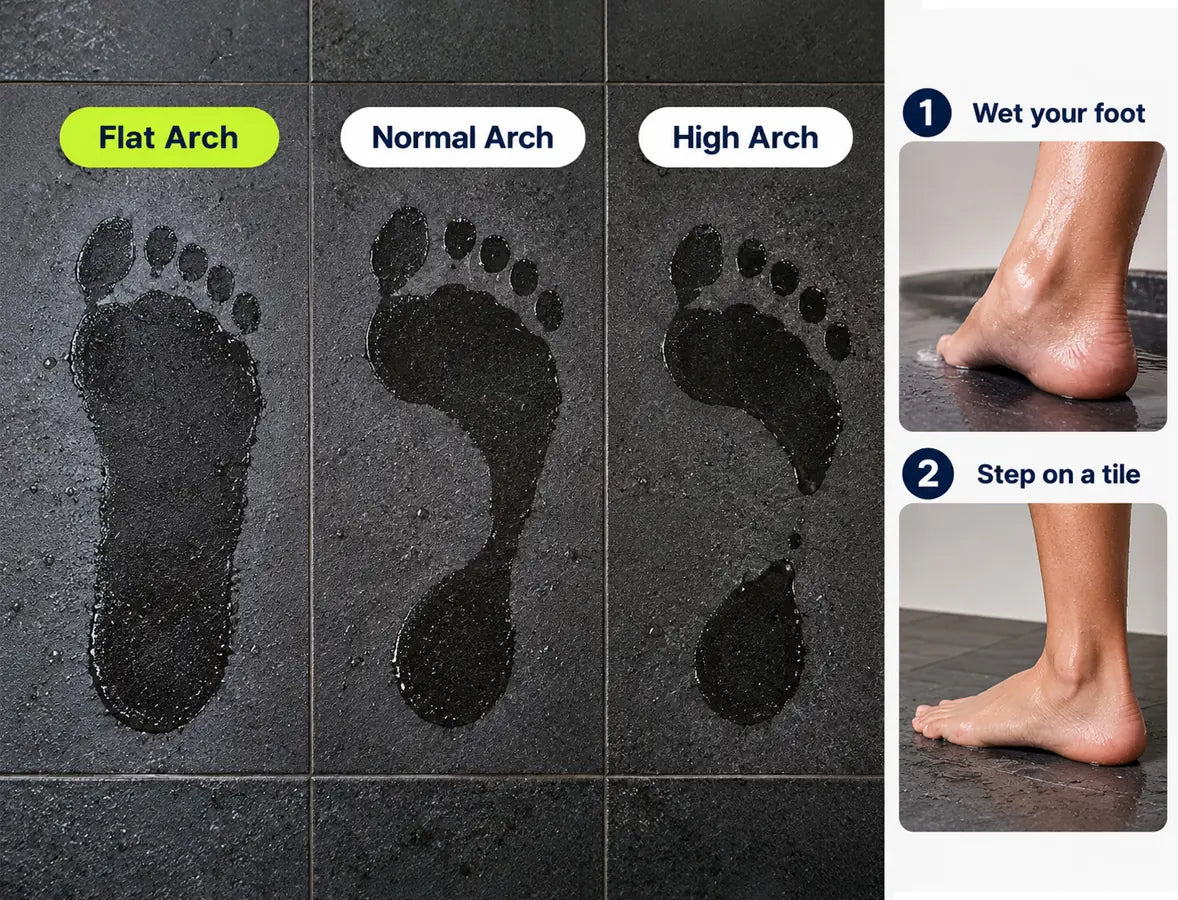
Then a cousin mentions, casually, that "flat feet get rejected in the army medical". You look at his wet footprints on the bathroom tiles and they look, well, flat. That night you are searching on your phone until 1 am.
Take a breath. Flat feet do not automatically rule anyone out of the NDA or the armed forces. What medical boards generally look at is not how flat the footprint is, but whether the foot is flexible, strong and pain-free. Most children's flat feet are exactly that. Here is what the official standards say, and what genuinely helps.
Will flat feet stop my child from clearing the NDA or army medical?
Not automatically. The published armed forces standards we checked accept flat feet that are flexible, supple and painless, and reject flat feet that are rigid, fixed or painful. The deciding question is how the foot works, not what the footprint looks like.
The clearest official wording we found is in the Indian Air Force's published physical and medical standards (Appendix A to the AFCAT 01/2024 notification, on the official afcat.cdac.in recruitment site). It says a candidate with flat feet is acceptable if the arches reappear on standing on toes, if they can skip and run well on their toes, and if the feet are supple, mobile and painless.
The same document lists as unfit: rigid or fixed flat feet, gross flat feet with the heel turned outwards, being unable to balance or skip on the toes, and painful joints in the middle of the foot. It adds: "Rigidity of the foot, whatever may be the shape of the foot, is a cause for rejection."
The Indian Coast Guard's published medical standards say the same in fewer words, listing "flexible flat feet with no significant history of pain" as an acceptable defect.
What do the Army, Navy and NDA standards say?
Medical boards across the services generally apply the same flexible-versus-rigid test, but always check the current official notification, because standards are revised. The NDA medical standards are printed as an appendix to the UPSC notification for each exam, on upsc.gov.in. The Army publishes its standards on joinindianarmy.nic.in and the Navy on joinindiannavy.gov.in.
Coaching-institute summaries of the NDA and CDS standards describe the same rule: flexible flat feet with full function are acceptable, rigid or fixed flat feet are not. Summaries, this article included, are not the official text, so before your child applies, read the medical appendix for their own exam cycle.
For NDA, the detailed medical comes after the SSB interview. Candidates recommended at the SSB are examined thoroughly by armed forces doctors, feet included.
Flexible or rigid flat foot: what is the difference?
A flexible flat foot has an arch that appears when the child stands on tiptoe or sits; a rigid flat foot stays flat whatever the child does. This one difference decides most of what follows, at the doctor and at a recruitment board.
| Flexible flat foot | Rigid flat foot | |
|---|---|---|
| Tiptoe test | Arch reappears on tiptoe; can balance, skip and run on toes | Foot stays flat on tiptoe; may struggle to balance or skip on the forefoot |
| Foot movement | Supple and mobile | Stiff, with limited movement |
| Pain | Usually none | Often stiff or painful in the middle or back of the foot |
| How common in children | Very common; most children outgrow it | Much less common; one cause is a bony bridge between foot bones (tarsal coalition) |
| Typical medical board view | Generally acceptable if painless and fully functional | Generally a reason for rejection |
OrthoInfo, the patient site of the American Academy of Orthopaedic Surgeons, describes flexible flatfoot exactly this way: when the child sits or stands on tiptoe, the arch reappears. It also notes that tarsal coalition, which can cause a rigid flat foot, affects an estimated one in 100 people and often does not show symptoms until early adolescence. So if a teenager's feet have started to feel stiff or sore, or an ankle keeps rolling, get it checked sooner rather than later.
How can I check my child's feet at home?
Ask your child to stand barefoot, then rise onto their toes, and watch the inside of each foot. If an arch appears as the heel lifts, the flat foot is flexible.

Three simple checks, barefoot on a clean floor:
- Tiptoe. Stand normally, then go up on the toes. Look for the arch curving up on the inside of each foot.
- Balance. Hold the tiptoe position for a few seconds without wobbling much.
- Skip. Skip across the room on the balls of the feet, then hop a few times on each foot.
All three done comfortably with no pain is a good sign. If the arch does not appear, the foot feels stiff, or anything hurts, see a paediatrician or paediatric orthopaedic doctor. These checks are a guide, not a medical certificate.
A wet footprint on the tiles cannot tell flexible from rigid. That is why the tiptoe check matters more.
What about state police and paramilitary medicals?
Police rules are written differently by each state, and some list "flat foot" as a defect in plain words, so read your own state's current recruitment rules carefully. Do not assume the armed forces' flexible-versus-rigid wording applies.
Two official examples show how blunt the wording can be:
- The Kerala PSC notification for Police Constable (Armed Police Battalion) says candidates "must be free from apparent physical defects like knock-knee, flat foot, varicose vein, bow legs".
- Delhi Police's recruitment rules for Constable (Executive), as quoted in a 2018 public notice on the Delhi Police website, say the candidate "must not have knock knees, flat foot, varicose vein".
Some central rules are more nuanced. The Border Roads Organisation medical standards, published through the Staff Selection Commission, accept "mild flat feet but flexible" as a minor defect if the medical board is satisfied it will not affect the recruit's efficiency, while gross flat feet remain a reason for rejection.
Most systems also have a review process, with tight deadlines. The Ministry of Home Affairs guidelines for the Central Armed Police Forces (2021) allow a Review Medical Examination, but the candidate's written consent for it must be submitted within 24 hours of being told they are unfit at the detailed medical.
What happens if my child is declared unfit at the medical?
In the armed forces system there is usually a route to appeal, but the time limits are short and the details are in the notification. Candidates declared unfit at the Special Medical Board can generally ask for an Appeal Medical Board, and in some cases a Review Medical Board after that.
As one example, the Indian Coast Guard's published standards allow an Appeal Medical Board within 42 days of the date last examined. If found unfit again, the candidate may ask for a review within one day of the appeal board, but granting a Review Medical Board rests with the DG AFMS (Director General, Armed Forces Medical Services) and "is not a matter of right". The review board's decision is final.
Check the exact steps in your child's own notification and board paperwork.
Will my child's flat feet go away before they are old enough to apply?
For most children, flat feet either improve with age or stay flexible and painless, which is what boards generally look for. OrthoInfo says children with flexible flatfoot often do not develop arches until age 5 or older, most outgrow it, and some never develop arches at all, which needs no treatment if there is no pain.
What you cannot do is push the arch into shape with a product. A 1989 study by Wenger and colleagues in the Journal of Bone and Joint Surgery gave young children with flexible flat feet corrective shoes or inserts for three years. They ended up no different from children given nothing; the arches improved in every group.
What does seem to matter is how much children use their feet. A survey of 2,300 Indian children aged 4 to 13, published in 1992 by Rao and Joseph in the Journal of Bone and Joint Surgery, found flat foot in 8.6% of children who wore shoes against 2.8% of those who did not, and it was most common in children who wore closed shoes. It is an observational study, so it does not prove shoes cause flat feet, but it is a good reason to give growing feet plenty of barefoot time. More in Barefoot or shoes? and our guide to flat feet in children.
What helps a teenager's feet stay strong, flexible and pain-free?
Plenty of varied movement, some barefoot time, calf stretches and shoes that fit. None of this will turn a rigid foot flexible or change the bones, but it keeps feet and legs strong, supple and comfortable through years of training.
- Play different sports. Football, athletics, swimming, badminton, skipping and cricket all use the feet in different ways.
- Spend time barefoot. On the floor at home, on grass at the maidan, on sand at the beach. Avoid hot roads, broken ground and monsoon puddles.
- Stretch the calves. OrthoInfo notes doctors often recommend heel-cord stretches for children with flexible flatfoot who have discomfort. A wall stretch held for 30 seconds each side after a run is a good habit.
- Build the feet. Slow heel raises, standing on one leg while brushing teeth, picking up a towel with the toes.
- Wear shoes that fit. Running shoes with room at the toes and a heel that does not slip.
- Do not ignore pain. Aching arches or shins that keep coming back after training are a reason to see a physiotherapist or doctor.
A warm oil massage (maalish) from Nani soothes tired calves after a run. It will not build an arch, and that is fine.
Can an insole help my child clear the medical?
No. An insole does not change the structure of the foot, and it will not help anyone pass a medical examination. Be wary of anyone who claims otherwise.
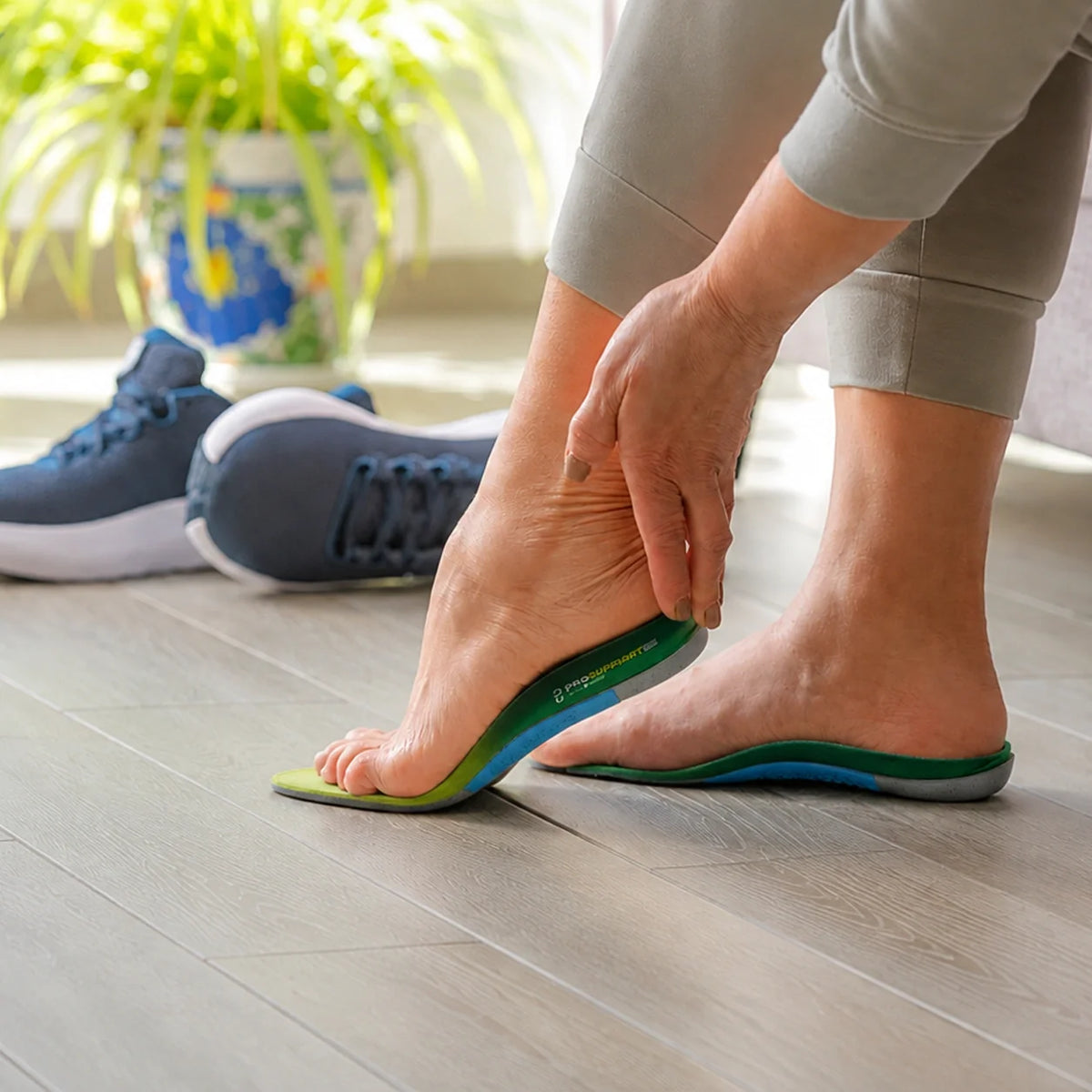
What an insole can do is make long training days more comfortable while it is worn. For a teenager in adult shoe sizes putting in kilometres for the running tests (size S fits UK 4 to 7; our insole size guide has the full chart), our Sports Support Insole adds cushioning and support inside running shoes. If their legs feel fine without one, they do not need it.
If a younger brother or sister has flexible flat feet and tired legs by evening, our Sprouts kids insoles are made for small feet, with a soft flexible arch and no rigid shell. They fit only young children, from UK kids 6 to youth 1; go by the UK size on the school-shoe box or foot length, not age, as many Indian children reach a size later than charts say. Again, this is comfort while worn, not a way to shape the arch. Our honest take on whether children need insoles at all is in Do kids need arch support insoles?
Which 8ease is right for your child?
| If this sounds like your child | Start with | Price |
|---|---|---|
| Arch appears on tiptoe, no pain | Nothing needed. Keep them active | Free |
| Foot stays flat on tiptoe, feels stiff, or hurts | A paediatric orthopaedic doctor, before any product | Consultation fee |
| Teen in UK 4 to 7, legs tire during running practice | Sports Support Insole, size S, for comfort while training | ₹649 |
| Younger sibling with flexible flat feet (UK kids 6 to youth 1), tired legs by evening | Sprouts kids insoles | ₹799 |
Free delivery above ₹599. Cash on delivery available. 15-day easy returns.
When to see a doctor
- The arch does not appear when your child stands on tiptoe
- The foot feels stiff, or your child cannot balance or skip on their toes
- Pain in the arch, mid-foot or below the ankle, especially if new in the teenage years
- Ankles that keep rolling, or repeated sprains
- Pain on one side only, or pain that stops training or play
Frequently asked questions
Is flat foot allowed in the NDA?
Flexible flat feet that are painless and fully functional are generally accepted by armed forces medical boards, while rigid or fixed flat feet are generally rejected. Read the medical appendix in the current UPSC notification for the exact wording, as standards are revised.
What is the tiptoe test in the army medical?
It checks whether the arch reappears on standing on the toes, and whether the candidate can balance, skip and run on their toes. The Indian Air Force's published standards use these checks to separate an acceptable flexible flat foot from an unfit rigid one.
My son's footprint is completely flat. Will he be rejected?
Not because of the footprint alone. A flat wet footprint is very common and says nothing about flexibility. If his arch appears on tiptoe and his feet are supple and pain-free, that is what boards generally look for.
Is the police medical the same as the army medical for flat feet?
No. Each state writes its own rules, and some, such as the Kerala and Delhi police constable rules, list flat foot as a defect in plain words. Read your state's current notification and check whether a review medical is allowed and how quickly you must ask for it.
When should I get my child's feet checked if they want to join the forces?
Straight away if there is pain or stiffness. Otherwise, a check in the early teens is sensible, because causes of rigid flat foot often first show up in early adolescence, leaving time to understand the situation well before applications.
This article is general information, not medical advice. If your child has pain that is severe, getting worse, only on one side, or stops them playing, please see a paediatrician.
Related reading
- Flat Feet in Children: What's Normal at Each Age, and When to See a Doctor
- Do Kids Need Arch Support Insoles? An Honest Answer for Indian Parents
- Barefoot or Shoes? What Grass, Sand and Barefoot Shoes Do for Your Child's Feet
- Flat feet and plantar fasciitis in adults: why Indian feet need better insoles