
Have you ever noticed how often we discuss foot pain in India? An aunt complaining about her heels after a long day of shopping, a colleague who can’t stand for too long, or maybe even that sharp pain you feel yourself when you get out of bed.
It’s so common that most of us just assume it’s a normal part of getting older or being tired. But here’s the truth: it’s not normal, and you don’t have to live with it.
A lot of this pain comes down to a simple mismatch: our feet weren't designed for the world we live in today. Our environment, from our concrete cities to our daily habits, puts a unique kind of stress on our feet. Let’s talk about what’s really going on and how a simple solution can make a world of difference.
The Modern Indian Environment vs. Our Feet
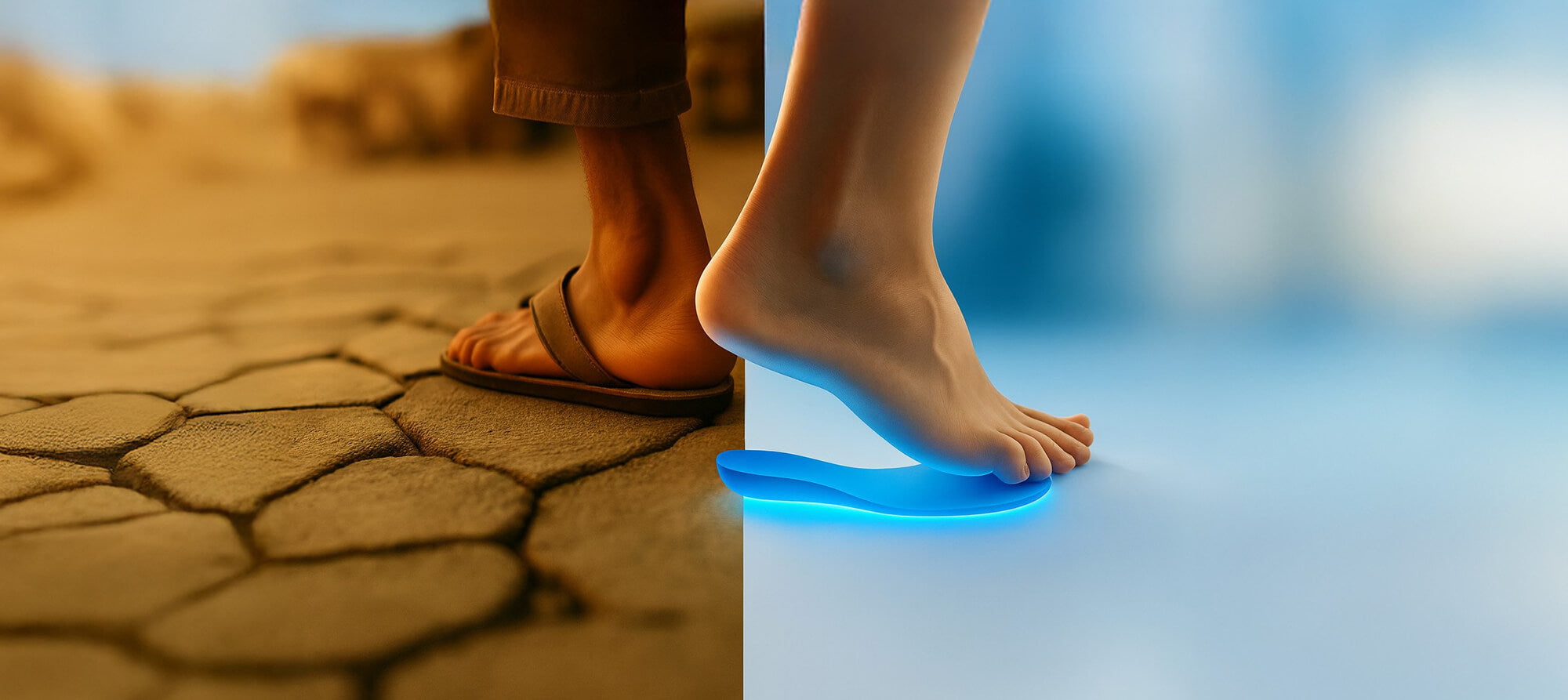
Think about it. For centuries, people walked on softer, uneven surfaces like soil and grass. Our feet are naturally built to adapt to that. But today, the reality in places like Hyderabad, Mumbai, or Delhi is completely different.
- We live on hard surfaces: Most of us walk on unforgiving tile, marble, or concrete floors all day long. Every single step sends a shockwave up from your foot through your body. There's no natural give, no softness to cushion the blow.
- Our footwear is often unsupportive: We love our chappals, sandals, and juttis. They're great for the heat, but most of them offer zero support. Even many formal shoes and sneakers come with flimsy, paper-thin insoles that flatten after a week.
- We stand for hours: Whether it's a long commute on the train, a job in retail or teaching, or hours spent in the kitchen for the family, our feet are under constant pressure.

This combination of hard surfaces and poor support is the perfect recipe for foot problems. Two of the most common issues we see are flat feet and Plantar Fasciitis.
A Closer Look at Flat Feet
So, what exactly are flat feet? It’s when the arch, or the curved area on the inside of your foot, is very low or completely collapsed.
A quick way to check is the "wet test." Get your feet wet and stand on a dry surface where you can see your footprint, like a concrete step or a dark tile.

- A normal arch will leave a print of your heel, the ball of your foot, and your toes, with a clear curve on the inside.
- A flat foot will leave a print of almost your entire foot. There’s very little curve.
Why is this a big deal? Your arch acts as your foot’s natural shock absorber and stabiliser. When it collapses, your foot is no longer aligned correctly. This sets off a chain reaction of problems. Your foot may roll inward, a condition called Overpronation, which forces your ankle, knee, and hip out of alignment. This is why people with flat feet often experience pain not just in their feet, but in their knees and lower back. Your body is trying to compensate for the lack of support, and it gets tired and sore.

That Sharp Morning Heel Pain: Plantar Fasciitis
Does this sound familiar? You wake up, and those first few steps out of bed feel like you’re stepping on a sharp stone. The pain is intense, right in your heel, and it might ease a bit as you walk around.
That’s the classic sign of Plantar Fasciitis.

The Plantar Fascia is a thick band of tissue that runs along the bottom of your foot, connecting your heel to your toes. When it’s put under too much stress, often from flat feet, standing all day on hard floors, or wearing unsupportive shoes, it gets inflamed, and tiny tears can form. That’s what causes the pain. It’s often worse in the morning because the tissue tightens up overnight while you sleep.
What’s the Real Solution?
Many people try temporary fixes, a soft gel pad, a quick massage, but these don't solve the underlying problem. The issue is structural. You need to support the foot's arch and cushion it from the daily shock of walking on hard surfaces.
This is where a good insole makes all the difference. But not just any insole will do. To properly tackle issues like flat feet and plantar fasciitis, you need specific features:
-
Firm, Structural Arch Support
Soft, squishy gel pads feel nice for a minute, but they don't provide the structural support needed to correct alignment. You need arch support insoles with a firm but flexible structure that holds your arch up, preventing it from collapsing with every step.
-
A Deep, Stabilizing Heel Cup
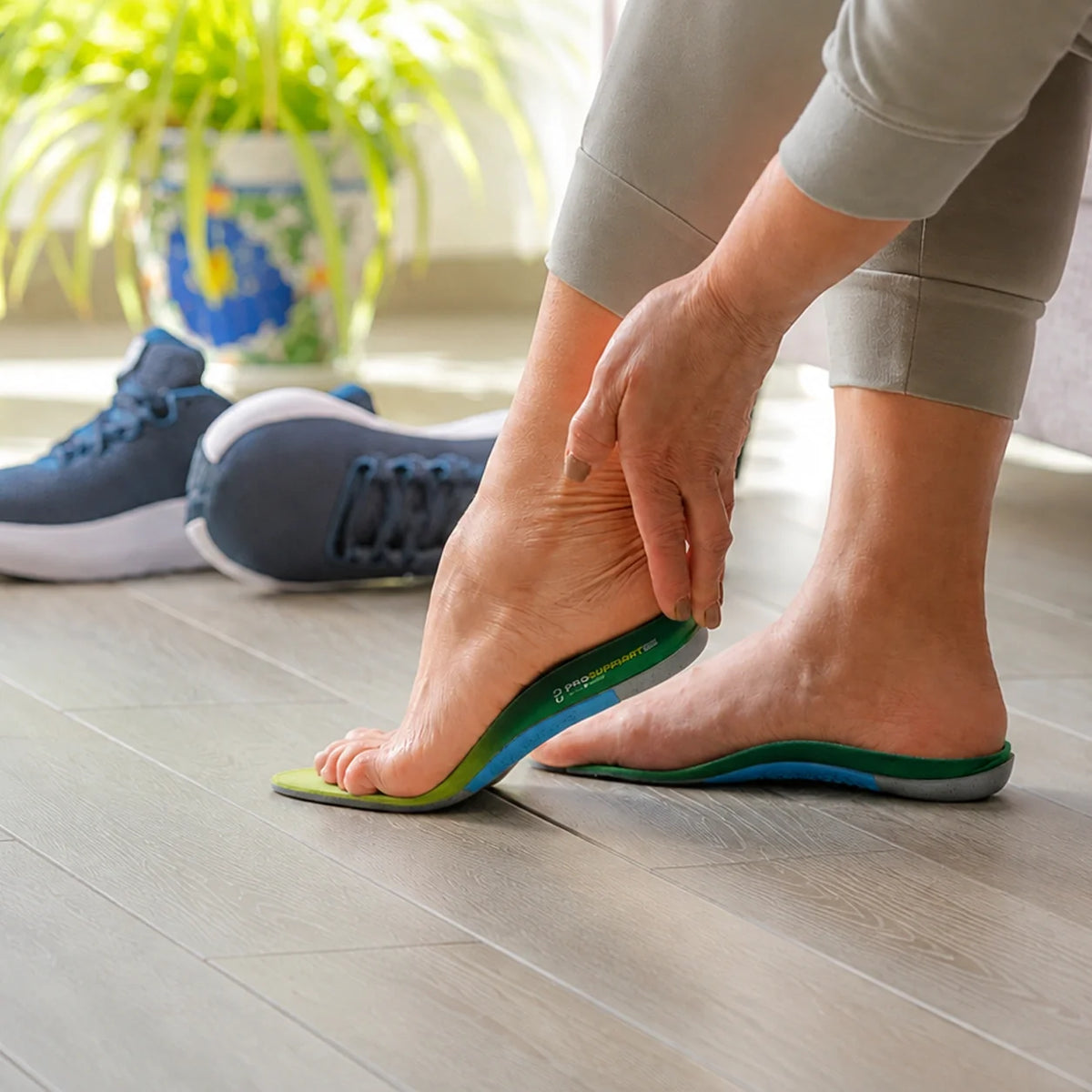
The insole should cradle your heel. This does two things: it provides crucial cushioning to absorb shock, and it helps stabilise your foot, preventing it from rolling inward or outward. This is a critical feature for effective plantar fasciitis insoles.
-
Durable, Shock-Absorbing Material
The insole material needs to be tough enough to withstand your body weight and the constant impact of walking on hard surfaces without flattening. It should also be breathable, especially in our hot and humid Indian climate, to keep your feet cool and dry.

How 8ease is Designed for Indian Feet
Understanding these problems is exactly why we created 8ease. We didn't just want to sell another cushion; we wanted to provide a real, long-term solution built for the Indian lifestyle.

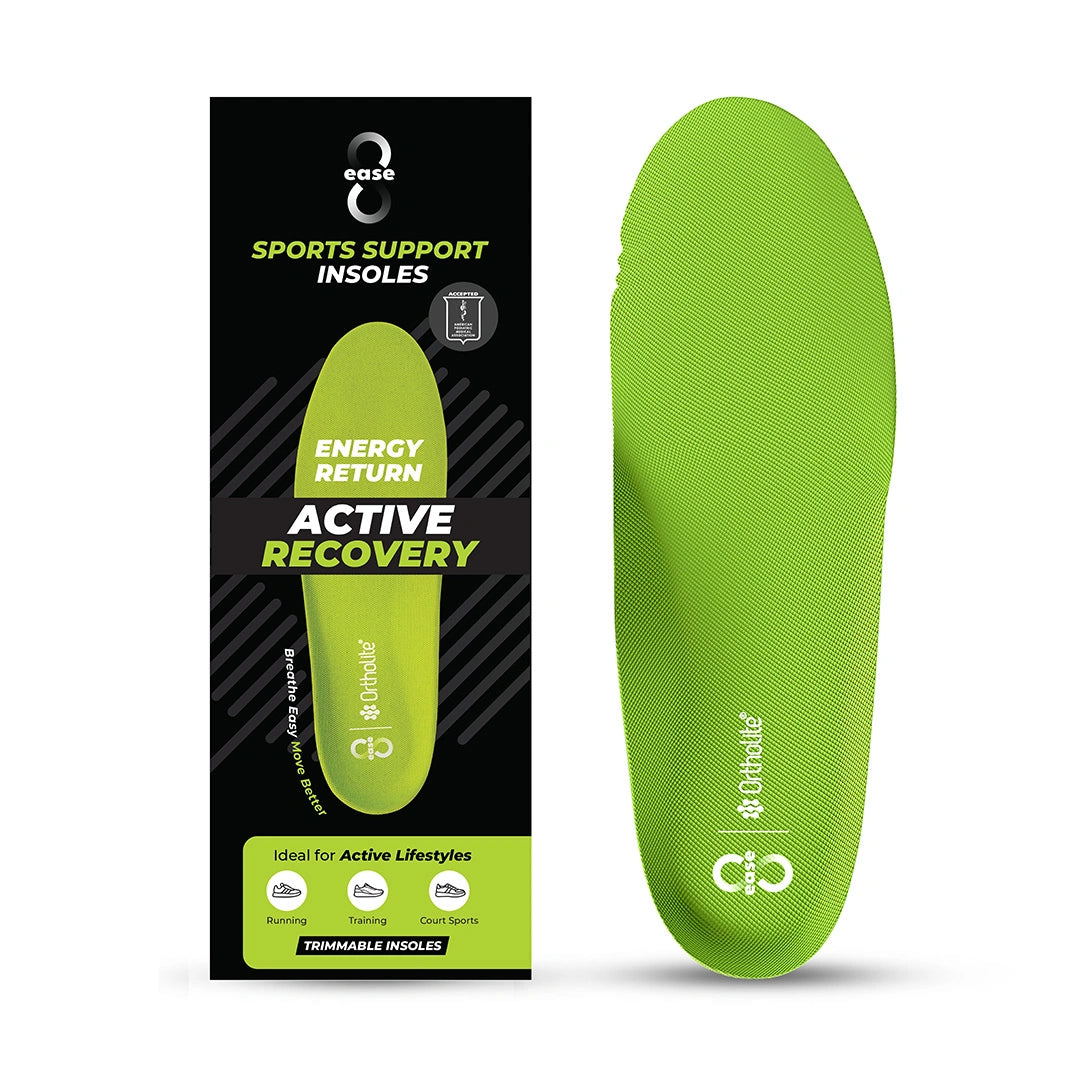
Our Daily Relief Arch Insoles are engineered to be the perfect insoles for flat feet India. Here’s how they directly address the issues:
- Targeted Arch Support: Our insoles have a medically-designed arch shape that provides firm, reliable support to lift a collapsed arch. This helps realign your foot and, by extension, your knees and hips, relieving the chain reaction of pain.
- Engineered Heel Cushioning: The deep heel cup in our insoles cradles the heel bone, providing targeted relief right where plantar fasciitis pain strikes. It absorbs the shock from hard tiles and concrete, taking the pressure off the strained tissue.
- Advanced, Global Technology: We use a globally recognized foam that’s trusted by over 500 international brands and is approved by the American Podiatric Medical Association (APMA). This open-cell foam doesn't just cushion; it resists compression, meaning it won't flatten out. Your support will last for up to 2 years. Plus, it's moisture-wicking and machine washable, a must-have for Indian weather.
So, the next time you feel that ache in your arch or that sting in your heel, remember that it’s not something you just have to tolerate. It’s your body telling you it needs better support. Investing in a quality pair of insoles is one of the simplest and most effective decisions you can make for your daily comfort and long-term health. It’s about giving your feet the foundation they need to carry you happily through every part of your busy life.
Frequently Asked Questions
1. Can insoles cure my flat feet or plantar fasciitis?
Insoles don't permanently change your foot's structure, so they don't "cure" flat feet. Instead, they work as a support system. By wearing them, you provide the arch with the structure it needs, which corrects your alignment and relieves symptoms. For plantar fasciitis, they provide the ideal healing environment by reducing stress on the inflamed tissue.
2. How long does it take for insoles to start working for heel pain?
Many people feel immediate cushioning and relief from shock. For the therapeutic benefits to take hold and reduce inflammation in the plantar fascia, it can take anywhere from a few days to a couple of weeks of consistent use. The key is to wear them as much as possible.
3. I feel a bit of pressure under my arch with the new insoles. Is that normal?
Yes, it's completely normal. If you've had flat feet for a long time, your foot isn't used to being properly supported. We recommend a break-in period: wear them for just 1-2 hours on the first day, and gradually increase the time over a week. This gives your feet time to adapt to the new, healthier alignment.
4. How are 8ease insoles different from cheap ones at the chemist?
Most insoles available locally are simple gel or foam pads that offer temporary cushioning but no real structural support. They flatten quickly and don't correct alignment issues. 8ease insoles are orthotic-grade, designed with biomechanics in mind, and made from durable, advanced materials that provide consistent support for years.
5. Should I wear my insoles in all my shoes?
For the best results, yes. Consistency is key to keeping your feet aligned and pain-free. Our insoles are trim-to-fit and can be easily moved between your different pairs of shoes, from your work shoes to your sneakers.
Related Blogs
What are insoles and should you care? Expert Guide for Indian Feet
Arch support insoles: How do they work and why do Indian feet need these?