
It's a story every woman knows. You find the perfect pair of heels or sandals. You love how they look. But after just an hour, the excitement turns into that familiar, throbbing pain in your heels.
We often accept this as the "price of fashion." But it doesn't have to be.
That sharp pain is your foot telling you it's under too much stress. The good news is that a simple, correctly placed heel pad can make a huge difference, turning a painful pair of shoes into ones you can actually wear all day.
Why heels and sandals cause heel pain
It's not just you, and it's not always about "bad shoes." The design of most heels and flat sandals creates a physics problem for your feet. They force your body's weight onto small areas that were never meant to take that much pressure.
Pressure imbalance and lack of heel cushioning
In a sneaker, your weight is distributed fairly evenly. But the moment you put on a heel, your foot slides into an unnatural angle. This angle shifts a significant portion of your body weight directly onto your heel and the ball of your foot.
Flat, thin sandals are just as bad. They offer zero shock absorption, meaning your heel bone takes the full impact of every step on hard Indian tile and concrete floors.
This constant, focused pressure is what leads to pain, inflammation, and issues like heel spurs.
| Footwear Type | Pressure Distribution on Heel | Typical Pain Trigger |
|---|---|---|
| Sneakers/Flats | 30-35% | Minimal heel strain |
| Medium Heels (2-3") | 55-60% | Hard impact and friction |
| High Heels (4"+) | 70%+ | Heel compression, rubbing |
| Flat Sandals | 50-55% | Lack of cushioning, direct ground shock |

Common mistakes in fit and posture
Fit is everything. A shoe that is too loose causes your heel to slip and rub with every step, leading to blisters. A shoe that is too tight squeezes the heel, cuts off circulation, and causes a different kind of pain.
We also change how we stand. In heels, we often lean back slightly to compensate, which puts even more strain on our lower back and heels.
What heel pads actually do
A heel pad is more than just a piece of soft material. It's a tool that does two specific jobs: absorbing shock and distributing pressure.

Cushioning vs alignment support
- Cushioning is the most obvious benefit. The pad adds a soft, pillow-like layer that cushions the heel bone from the hard sole of the shoe.
- Alignment is the hidden benefit. A good heel pad, especially one with a "cup" shape, also cradles the heel. This keeps your foot stable, prevents it from rolling inward or outward, and helps keep your ankle in a healthier, more aligned position.
The science behind anti-shock padding
High-quality heel pads are made from materials specifically engineered to absorb shock. Instead of the shock from your step traveling up your leg, the pad intercepts and dampens it.
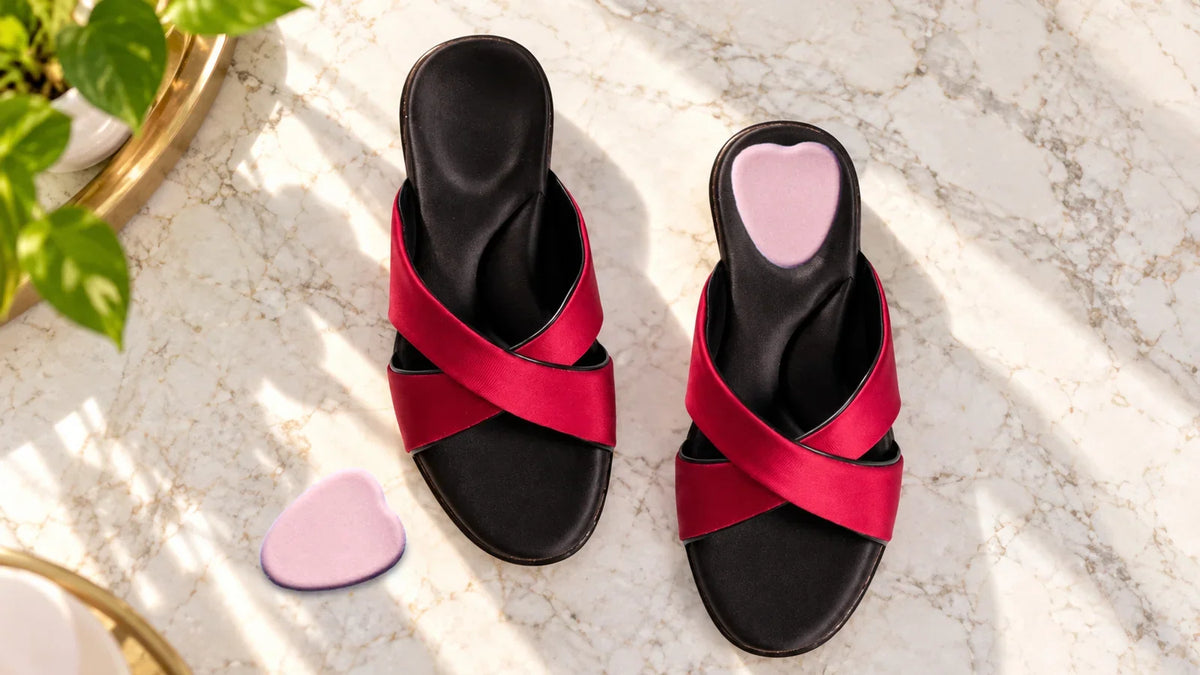
This is a key focus for 8ease. For closed formal shoes, the ComfortStep Heel Pads (₹279) are a micro-massaging PU foam pad with an anti-slip base, built to absorb heel strike without pushing your heel out of the shoe. For heels and sandals, the Belle HighHeel Wellness pad (₹279) is shaped for a narrow heel bed and stays put under a strap.
The goal isn't just softness; it's targeted relief for painful conditions like plantar fasciitis and heel spurs, right where the impact hits hardest.
How to choose the right heel pad type
Not all heel pads are created equal. The material and design are critical, especially for all-day wear in India's climate.
Gel vs foam heel pads: which works better
- Gel Pads: These are often very slim, which is good for tight shoes. However, they are not breathable, can get hot, and often have a squishy feel that doesn't provide real support.
- Foam Pads: High-quality open-cell foams (like Ortholite) are a better choice. They are lightweight, supportive, and breathable. They provide structured cushioning that won't flatten after just a few uses.
Breathability, adhesion, and thickness factors
- Breathability: In our hot, humid weather, this is a must. A non-breathable pad traps sweat, leading to odour and blisters. Look for materials that are anti-microbial and washable.
- Adhesion: The pad must stay in place. A weak adhesive will cause the pad to bunch up, creating a new, more annoying problem. A "Grip-fit base" is essential.
- Thickness: The pad should be thick enough to provide cushion, but thin enough that it doesn't make your shoe too tight.
Step-by-step guide to applying heel pads properly

A heel pad only works if it's in the right spot. Here's a simple 3-step guide.
Step 1 - Clean the heel cup
Before you do anything, wipe the inside heel area of your shoe with a clean, dry cloth. This removes dust, oils, and other residues, helping the adhesive stick properly.
Step 2 - Peel, position, and press firmly
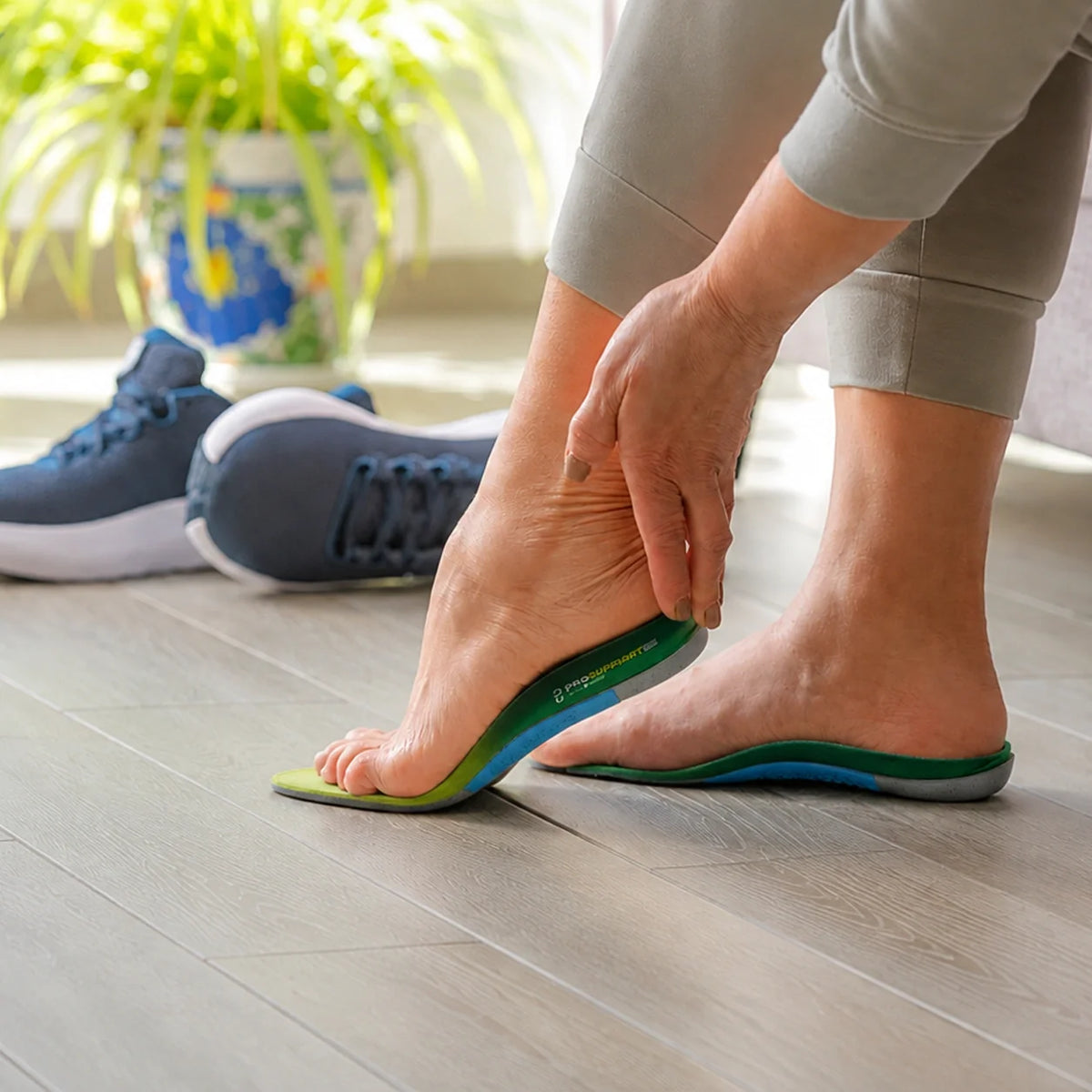
Peel the backing off the heel pad. Place it in the shoe with the flat side down, making sure it's pushed all the way to the very back of the heel. Don't place it in the middle of the insole. Once it's in position, press down firmly for a few seconds.
Step 3 - Test fit and adjust
Put the shoe on. Walk around your room for a minute. Does it feel comfortable? Is your heel properly cradled? If it feels off, gently peel it up and reposition it. It's best to get the fit right before the adhesive fully sets.
Mistakes to avoid when using heel cushions
Using heel pads the wrong way can sometimes make things worse. Here are two common mistakes.
Too thick padding - tightness & slippage
Bigger is not always better. A pad that is too thick will push your foot up and forward. This crams your toes into the front of the shoe and, even worse, lifts your heel out of the shoe's natural heel cup, causing it to slip out as you walk.
Reusing worn-out pads
Heel pads are not forever. After weeks of absorbing thousands of steps, the foam gets compressed and loses its ability to absorb shock. The adhesive also wears out. A worn-out, flattened pad is offering no protection.
When to replace heel pads
You should replace your heel pads when they stop feeling comfortable or stop sticking.
If you look at the pad and it looks visibly flattened, or if you notice the edges are peeling up, it's time for a new pair. A high-quality pad should last a long time, but once its cushioning is gone, so is its benefit.
Small Fixes, Big Comfort: A Final Word

Heels and sandals don't have to be a choice between looking good and feeling good. A simple, well-placed heel pad is a fantastic hack to solve a very specific problem.
But true, lasting comfort comes from supporting your body in all its daily movements. This is the core idea behind every 8ease product.
While a heel pad targets a single high-impact spot, our other solutions support your whole body.
The 8ease Circulo Active Mat, powered by Sp1ke™ technology, is made for the time you spend standing. Its 100+ massaging tips provide 'soft pressure therapy' to boost circulation in your feet and legs, relieving the soreness that comes from standing on hard kitchen or office floors.
Similarly, the 8ease Circulo Focus Seat Cushion uses the same Sp1ke™ technology to take pressure off your hips and back while sitting.
By supporting your body correctly, whether you're sitting, standing, or walking, 8ease makes it easier than ever to build a foundation of wellness from the ground up.
FAQs
Can I use heel pads in open sandals?
Yes, but it depends on the design. They work best in sandals with a defined heel cup or a back-strap. For open-back flat sandals, you'll need a pad with a very strong adhesive to keep it from slipping out.
Do heel pads stop blisters and shoe bites?
They can. If your blisters are caused by your heel slipping up and down, a pad can help lock your heel in place and reduce that friction.
How long do heel pads last?
This depends on the material quality and how often you wear them. A high-quality foam pad can last for many months, while a cheap gel pad might flatten or lose its stickiness much faster.
Can I layer heel pads over existing insoles?
Yes. Heel pads are designed to work on top of your shoe's existing insole. Just make sure you clean the surface before you stick it on.
Do heel pads work for plantar fasciitis?
They can provide significant relief. Plantar fasciitis is heel pain, and a pad with deep, high-quality cushioning can absorb the shock that aggravates it. The 8ease ComfortStep Heel Pads are designed for heel soreness in closed shoes. For sharp first-step pain in the morning that has lasted weeks, a full insole with a deep heel cup, the Plantar Specialist, does more than a pad can. Our heel pain guide explains which is which.
Which 8ease is right for you?
| If this sounds like you | Start with | Price |
|---|---|---|
| Heel pain in high heels or party sandals | Belle HighHeel Wellness | ₹279 |
| Heel soreness in closed office or formal shoes | ComfortStep Heel Pads | ₹279 |
| Burning under the ball of the foot in heels | Belle ForefootComfort | ₹279 |
| Shoe bite from new shoes or juttis | Belle BiteGuard strips | ₹279 |
| Sharp heel pain with the first step every morning | Plantar Specialist | ₹1,499 |
Free delivery above ₹599. 15-day easy returns. Ships in 5 to 7 days.
This article is general information, not medical advice. If pain is severe, sudden, or does not ease with support and rest, please see a doctor or physiotherapist.
Related blogs