




8ease Plantar Recovery Kit — For Heel Pain That Arrives With Stillness
In stock, ready to ship today
Returns
Payments
Available
8ease Plantar Recovery Kit — For Heel Pain That Arrives With Stillness
Extra 10% OFF on your first order
Use code FIRST10 at checkout

Ortholite® Foam

Soft Arch Support

Deep Heel Cup

Anti-Microbial
SECURED & TRUSTED CHECKOUT WITH:


Free delivery on orders above ₹499
7-day easy returns
100% secure payments
Delivered in 3–5 business days
8ease Plantar Recovery Kit — For Heel Pain That Arrives With Stillness
If you have any questions, you are always welcome to contact us. We'll get back to you as soon as possible, within 24 hours on weekdays.
-
Shipping Information
Use this text to answer questions in as much detail as possible for your customers.
-
Customer Support
Use this text to answer questions in as much detail as possible for your customers.
-
FAQ’s
Use this text to answer questions in as much detail as possible for your customers.
-
Contact Us
Use this text to answer questions in as much detail as possible for your customers.

The plantar fascia is a thick band of tissue running from the heel to the ball of the foot. Its job is to hold the arch's shape while you're standing on it. When you're asleep it settles into a shortened position; then you stand up and load it all at once, from short to fully stretched in a single step. That first step is the entire day's worst moment, and it happens before you've done anything. It's why rest alone doesn't resolve it, and why the pain feels backwards compared to every other kind: it's worst when you've done least.

Stretching is useful and worth continuing — it addresses the tissue, not the load arriving on it every day in between. Softer shoes cushion the impact and do nothing about arch position, which is what decides how far the fascia is stretched with each step. Painkillers manage the signal, not the cause. Rest is, ironically, the least effective, for the reason above. None of these are wrong. The piece none of them addresses is what the arch is doing during the ten to fifteen thousand steps in between.

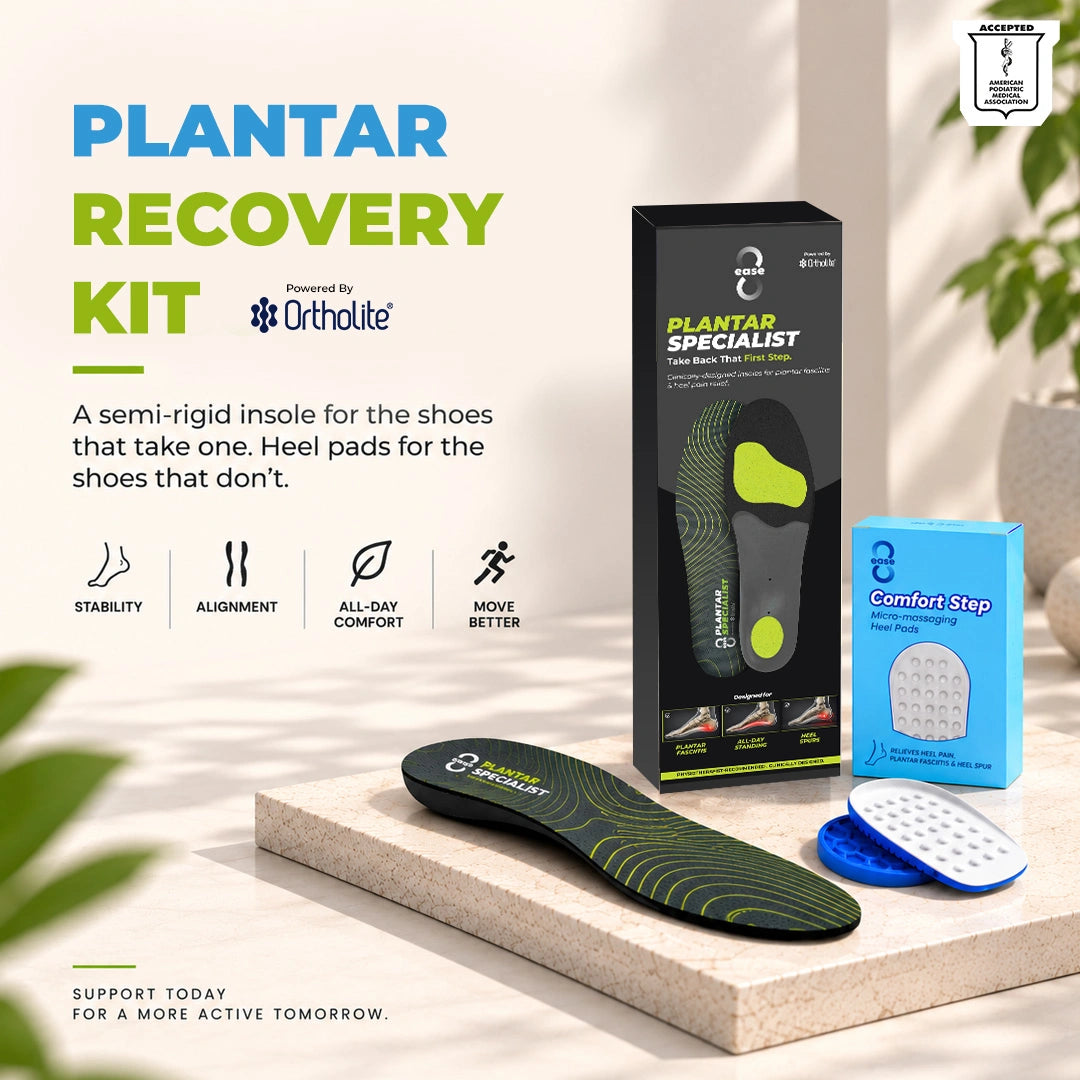
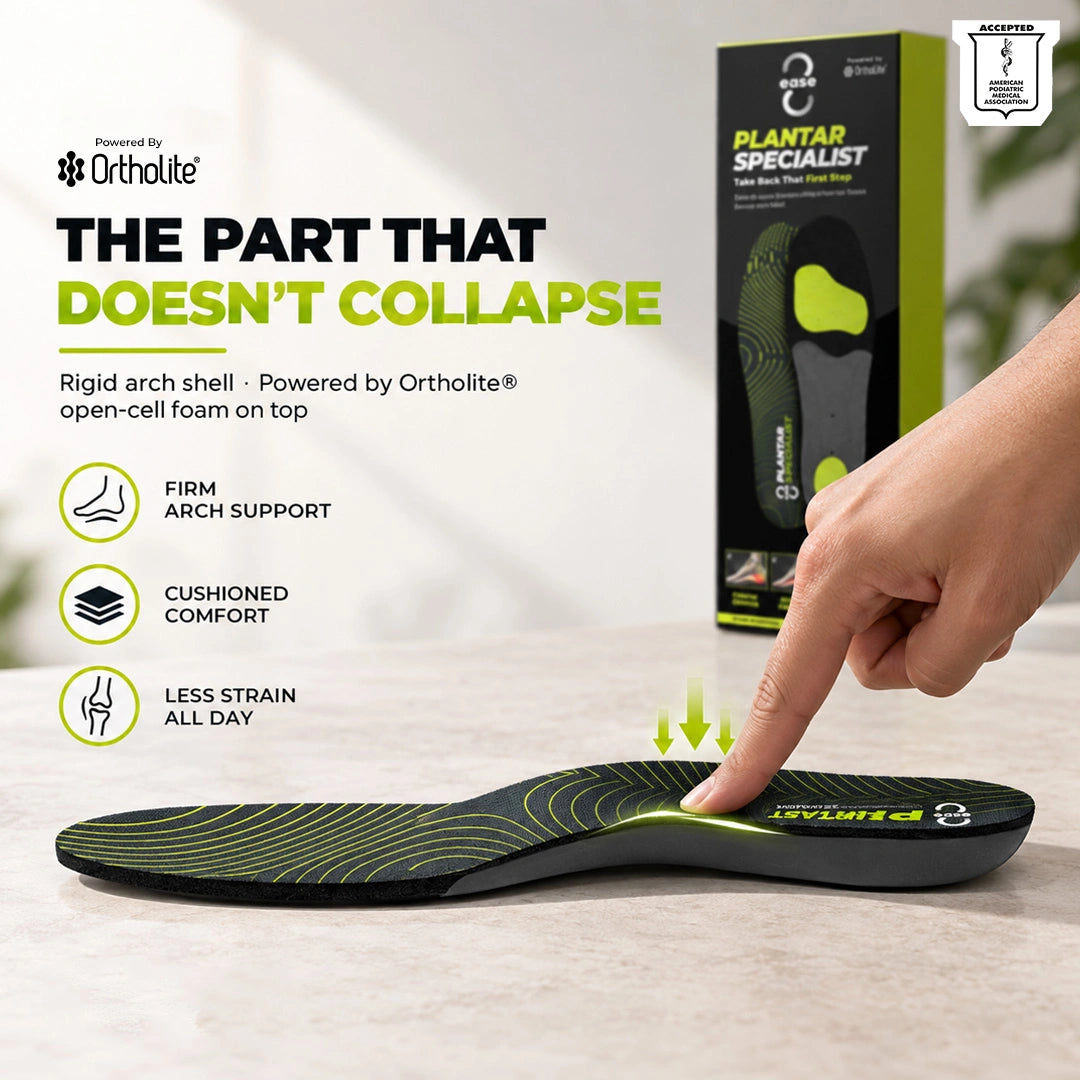
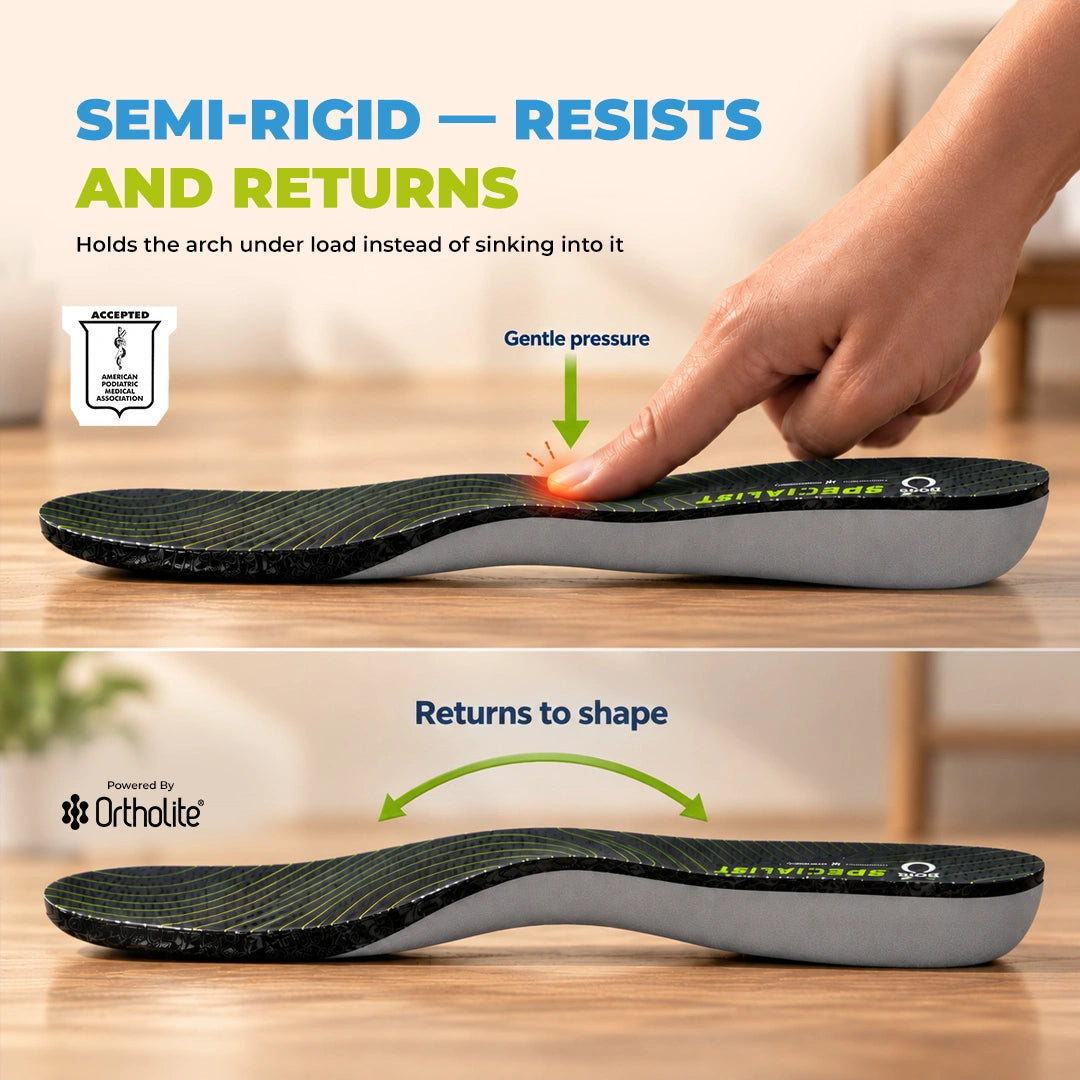
Semi-rigid means it resists a thumb press and returns. Under body weight it holds a shape rather than compressing into whatever shape your foot is already making — which is the one thing a soft insole cannot do, and the difference between cushioning the problem and supporting the arch while it settles. On top of the structure sits Ortholite® open-cell foam and a cushioned heel contact where the strike lands.

A 25mm semi-rigid footbed doesn't fit slip-ons, most formals, or anything shallow — and those are often what gets worn on the longest days. That's what the ComfortStep Heel Pads are for: cushioning delivered at the heel, in the shoes a footbed structurally cannot enter. On a foot that hurts specifically at the heel, leaving half the shoe rack uncovered is not a small gap. They wipe clean and move between shoes.
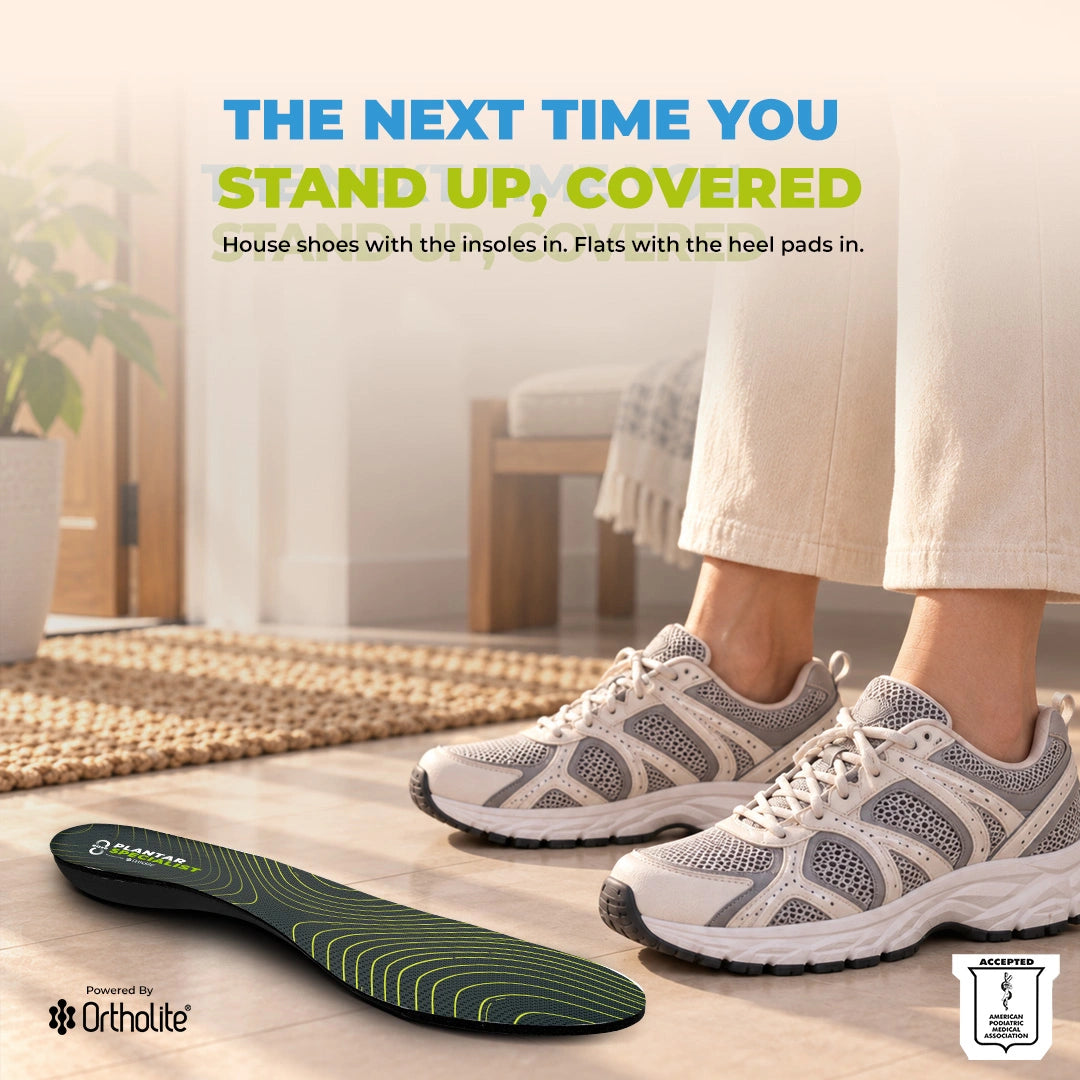
Covered Through the Whole Day, in Every Shoe
-

Trainers, walking shoes and roomier lace-ups
The full insole goes in (Plantar Specialist) -

Work shoes with a removable liner
The full insole replaces it (Plantar Specialist) -

House shoes on hard floors
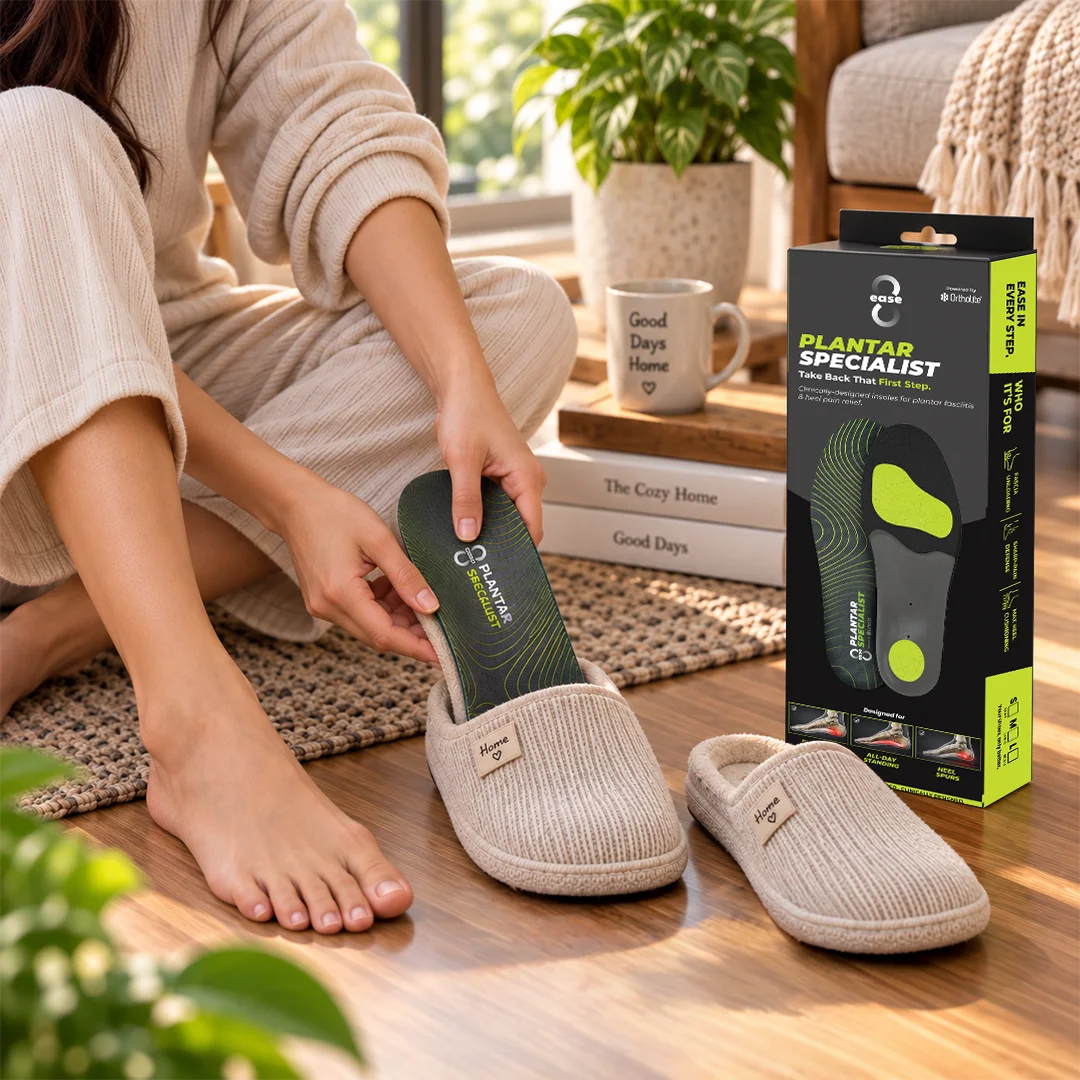
The practical answer to 'can I wear it barefoot at home' (Plantar Specialist in a house shoe) -

Long standing days and long flights
Whichever shoe you're in, the heel is cushioned (both)


The Science Behind the Support
Inside the Plantar Specialist insole: a semi-rigid arch shell, cushioned heel contact and Ortholite® open-cell foam — the footbed material inside footwear from 500+ global brands. The heel pads are a separate, simpler tool: cushioning at the one point that hurts, in the shoes the insole can't reach.
Semi-Rigid Structure — the Part That Doesn't Collapse
The arch shell is the reason this insole exists. It holds the arch in position through the hours the fascia is under load, so each step stretches it less far than it would on a flat or soft footbed. Firm on purpose: some people find the first few days unfamiliar, because the arch is being held in a position it hasn't been held in for months.
Ortholite® Open-Cell Foam on Top
Not memory foam, not gel. Open-cell PU that springs back after each step instead of packing down into a flat layer. Ortholite states its foam compresses less than 5% over the life of the product, so the contact layer is still doing its job in month eight. Breathable and moisture-wicking through a closed shoe on a hot day; the insole machine washes.
Built for a Long Process, Not an Event
The insole holds its arch shape through 2+ years of daily use — which matters here more than anywhere else in the range, because plantar heel pain is slow and a support product that goes flat in a month is no support at all. Keep stretching. Keep talking to your doctor or physio if you have one. This works alongside that, not instead of it.
We Are Not Going to Tell You This Is Quick
Plantar heel pain resolves slowly. Many people are dealing with it for a year or more, and anything sold to you on the promise of a fast fix is being sold dishonestly — you've probably been sold it once already. What this kit does is narrower and more useful: it holds the arch through the load of a normal day, cushions the heel where it lands, and covers the shallow shoes a full insole can't enter, so the support doesn't stop when you change shoes. A gel cup cushions the heel and nothing else. An ordinary soft insole compresses into the shape of the collapse. A 25mm semi-rigid structure holds. That is the whole difference, and it's the honest one.
Comparison Table
| Feature | An ordinary heel insole or gel cup | Plantar Recovery Kit |
|---|---|---|
| What it does | Cushions the heel | ✓ Supports the arch, and cushions the heel |
| Arch | None, or soft and token | ✓ 25mm semi-rigid structure |
| Under load | Compresses to the shape of the collapse | ✓ Holds |
| Shallow shoes | Uncovered | ✓ Heel pads built for exactly those |
| Heat | Traps it | ✓ Open-cell structure moves air and moisture |
| Life | Weeks | ✓ Insole holds its arch shape through 2+ years of daily use · machine washable |
Will this make plantar fasciitis go away?
Will this change the shape of my child's feet?
No. It's engineered to support the arch through the load of a normal day, alongside whatever your doctor or physio has you doing. Nobody selling an insole should be telling you otherwise.
How long before I notice something?
Most people who notice a change describe it around week three to four, in the mornings. Some don't. This is a slow condition and we won't pretend otherwise.
Should I still stretch?
Yes. Keep doing whatever a professional has told you to do — this doesn't replace it.
Is it thick? Will it fit my shoes?
25mm and semi-rigid — it goes into trainers, walking shoes, work shoes with a removable liner and roomier lace-ups. Not slip-ons or shallow formals, which is exactly why the heel pads are in the kit. Take the factory liner out first; don't stack them.
Do I pick one size for both?
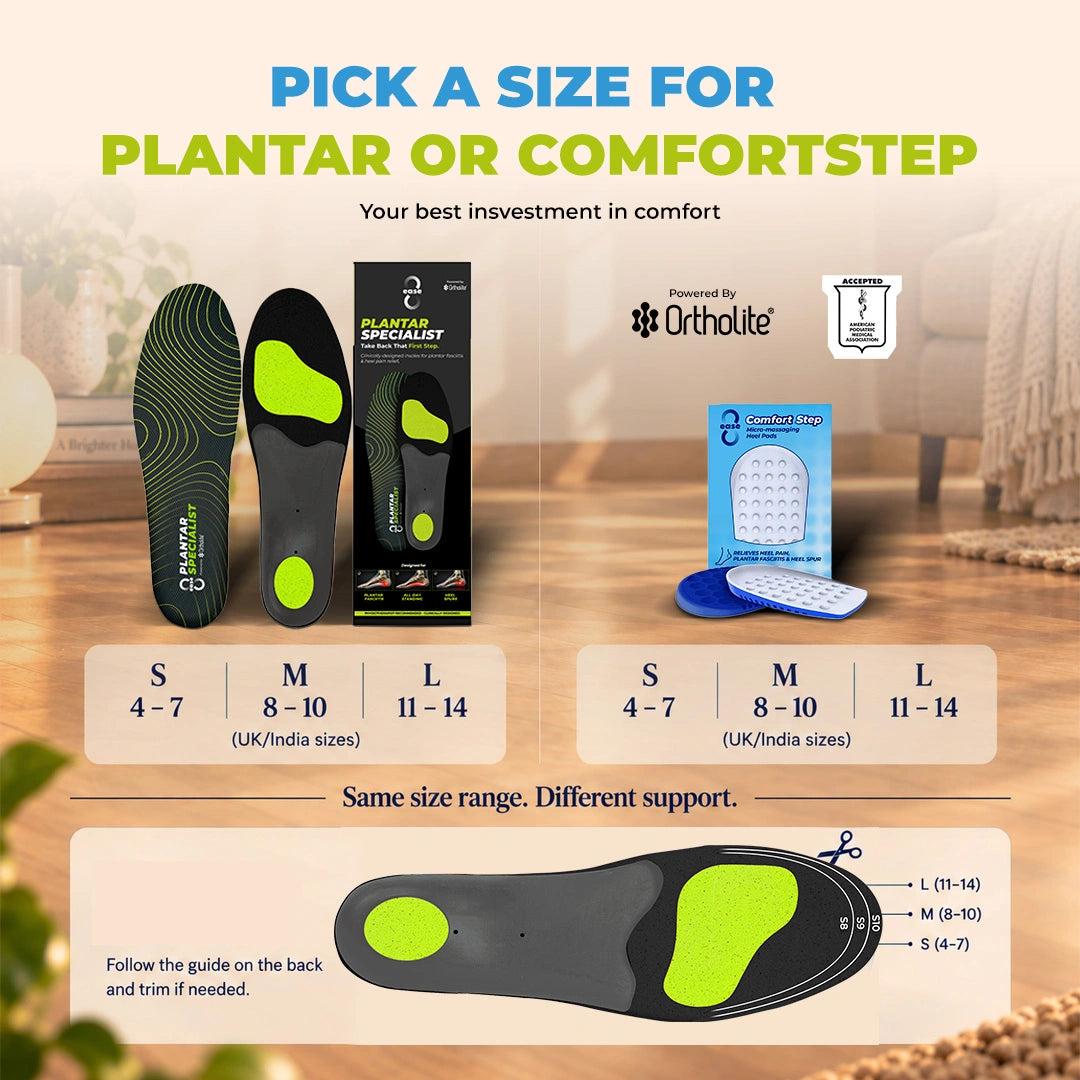
No. Plantar Specialist is S (UK 3–6) / M (UK 6–9) / L (UK 9–12). ComfortStep is S (UK 3–6) / M (UK 7–9) / L (UK 10–12). They look the same and differ at the top end — a UK 9.5 is Plantar L and ComfortStep M. Chosen separately at checkout.
Can I wear it barefoot at home?
No — it goes inside a shoe. If you're on hard floors at home, a pair of house shoes with the insole in is the practical version of that question.
Is the first week supposed to feel firm?
Yes. Semi-rigid is the point. Some people find the first few days unfamiliar because the arch is being held in a position it hasn't been held in for months. If you want soft, Sports Support (₹699) is the honest recommendation — but soft is not what this kit is for.
Is the saving real?
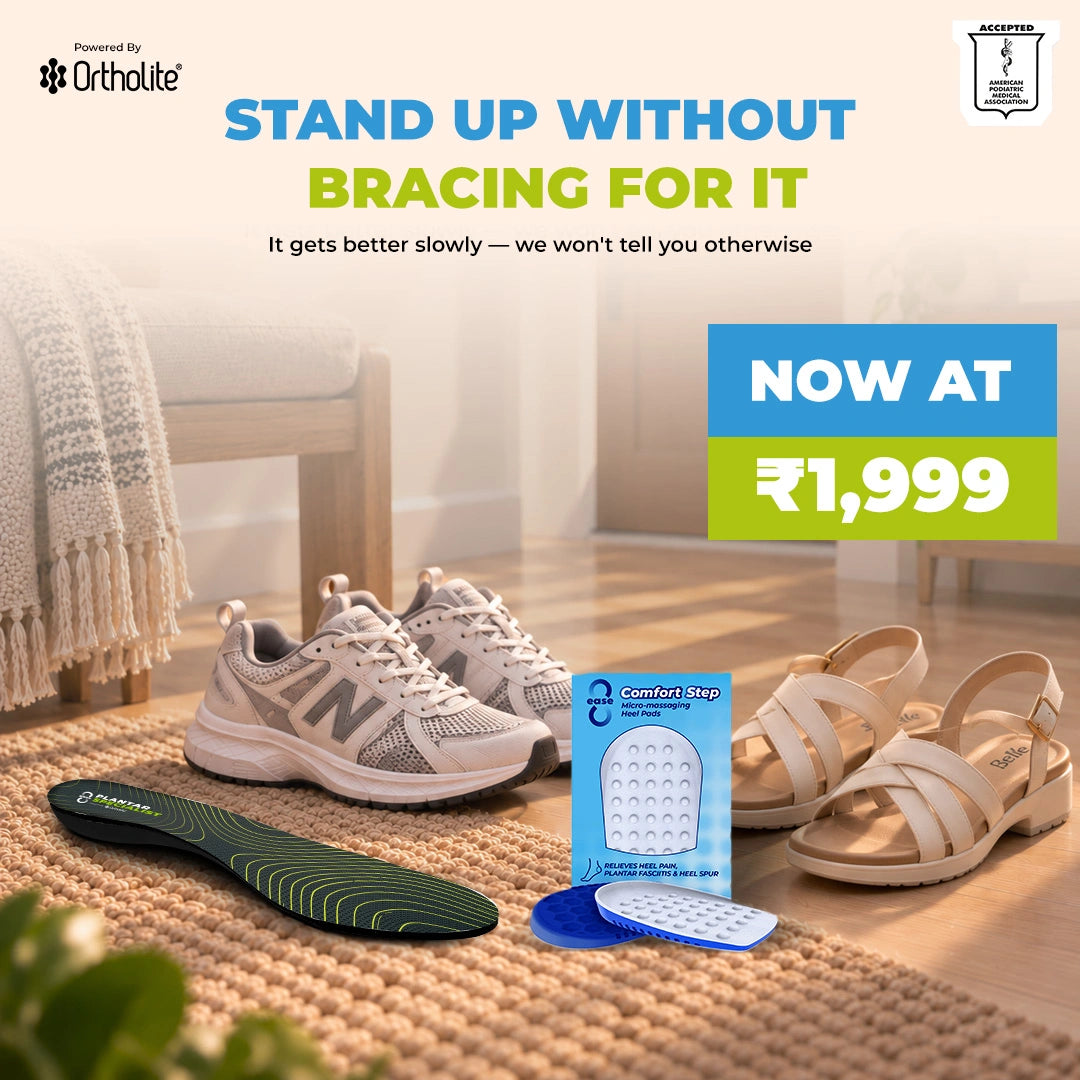
₹2,178 if you buy both separately, ₹1,999 together. Open either product page and check.
What if I order the wrong size?
Exchange it within 7 days. Both items trim to marked guide lines, which covers most of the length risk; the exchange covers everything else.
Is Cash on Delivery available?
Yes, across India. There is a ₹50 handling fee plus delivery on COD orders. Prepaid orders above ₹599 ship free.
When should I see a doctor instead of buying this?
If the pain is constant rather than worst after rest, if it started suddenly after an injury, or if there's swelling, redness or numbness — see someone first. Those are different patterns, and no insole is the right first step.
Tomorrow Morning Is Covered
Free delivery on prepaid above ₹599 · COD available (₹50 fee + delivery) · 7-day easy exchange
